Institut
für
unschädliche,unwirtschaftliche,unfassbare,unwiderstehliche,ultrageschmeidige,unglaubliche,unbeschwerte,umwerfende,umfassende,unbeschreibliche,unerwartete,ungezogene,unkonventionelle,urige,ungewöhnliche,unerschütterliche,unkomplizierte,unterhaltsame,umweltbewusste,unverbrauchte,unvergleichliche,urbane,unnachahmliche,unverbesserliche Baukunst
_I
I_
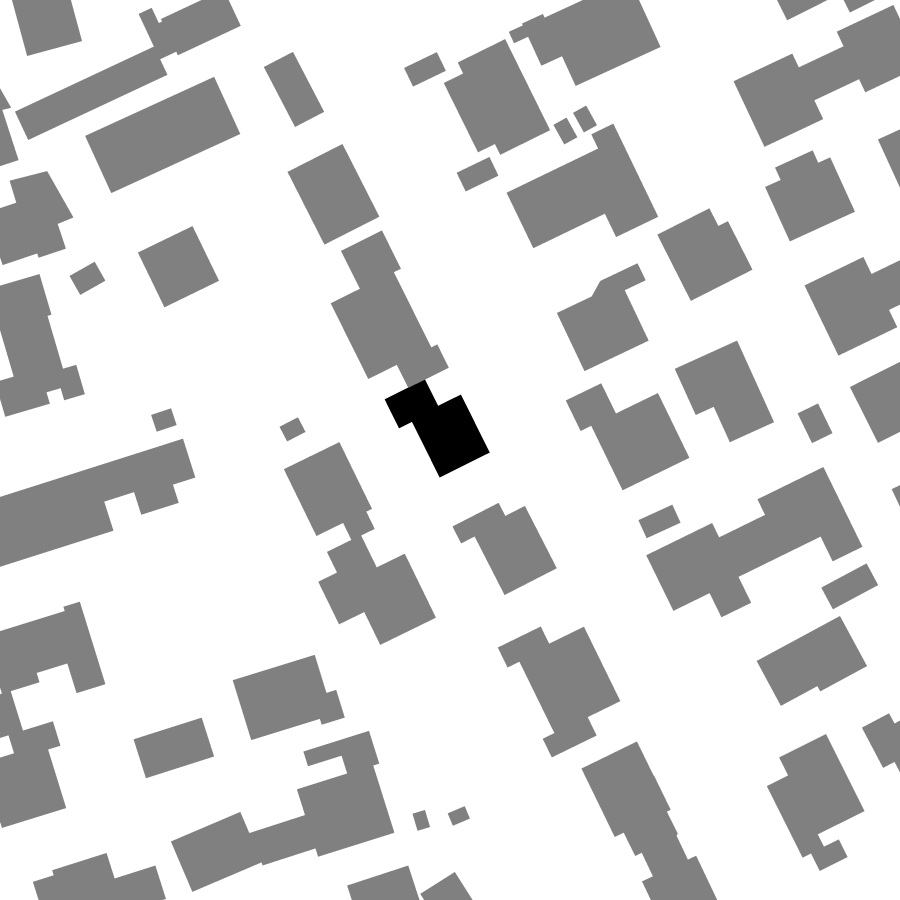
¯I Site plan
PLAN: IFUB* I¯

House G


Renovation and refurbishment of a single-family home


Location: 85521 Ottobrunn


Year: 2023-2025


Team IFUB*: Dominik Schmidt, Marco Bross, Clemens Gritl, Bernhard Kurz


Together with: Bau|Frei Beratende Ingenieure Geisler + Tremel PartGmbB (Tragwerksplanung), Herzog & Roth PartGmbB  (Wärmebrückenberechnung), Dipl.-Ing. Ariane Sibitzky (SiGeKo)


Client: private


Handwerker*innen: PLAN/B e. K. (Zimmerei und Generalunternehmer), BS Bautenschutz GmbH (Rohbau, Innenausbau, Erdarbeiten), HESAGO Heizung - Sanitär GmbH (HLS), EMG Elektrotechnik GmbH (ELT), Klaus Stank (Malerarbeiten)

HausG_Schwarzplan
_I
I_
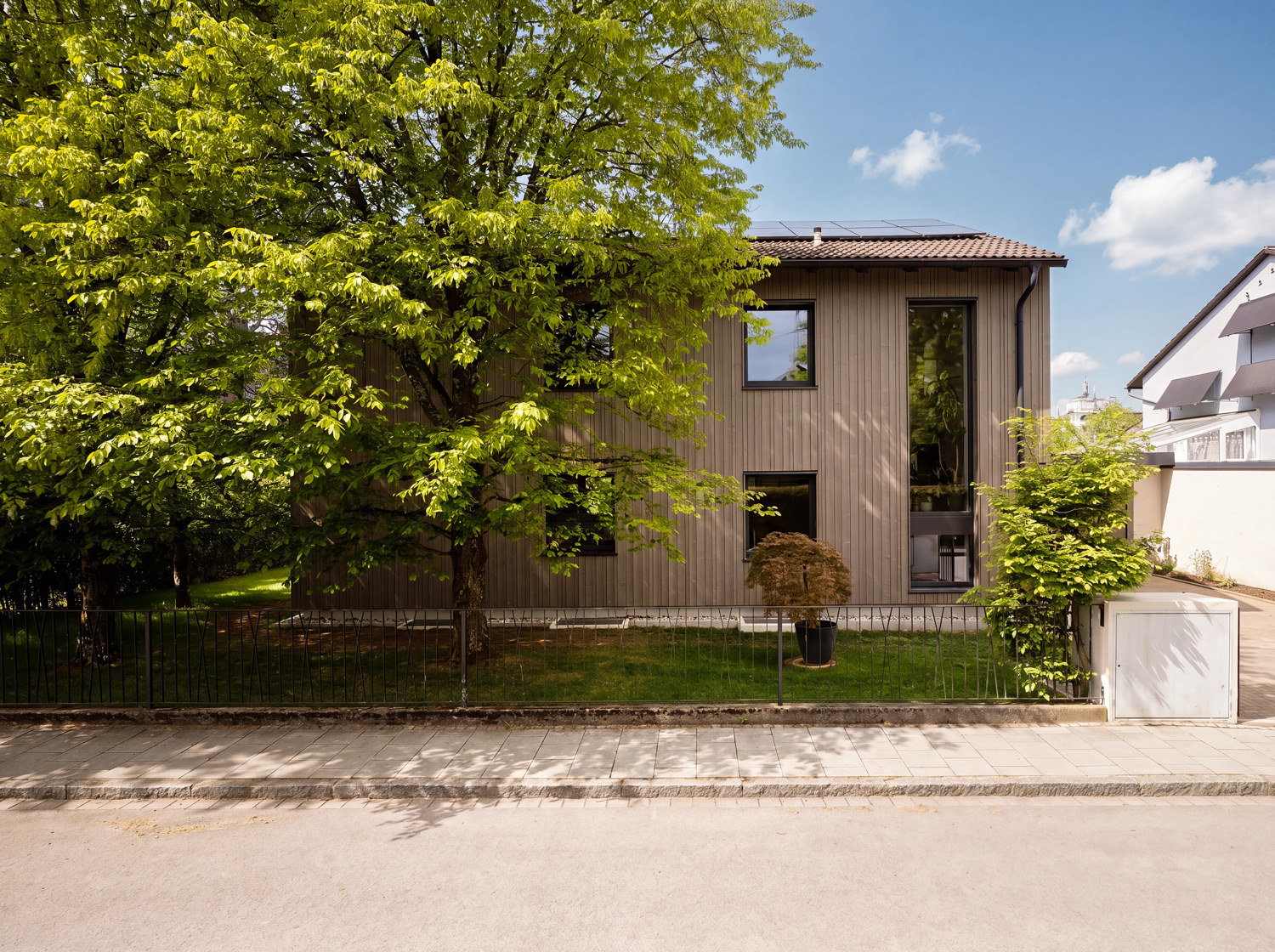
¯I Street View
Photo: Sorin Morar I¯

In the suburbs of German cities, a major transformation is slowly but surely beginning. Single- and two-family houses from the post-war and “economic miracle” years are being taken over by the next generations or sold to young families. Even if these houses have been well maintained and kept in good condition, renovation and often also conversion are now required. This is also the case with the

House G

built in 1975 in a suburb south of Munich, which was purchased by a young family. In addition to the energy-related and structural renovation, the adaptation of the floor plans to the living habits of the new residents was also on the agenda. The aim was to create a friendly, bright and open yet also flexible home while embracing the unique characteristics and particular qualities of the existing building.

HausG_Strassenansicht
_I
I_
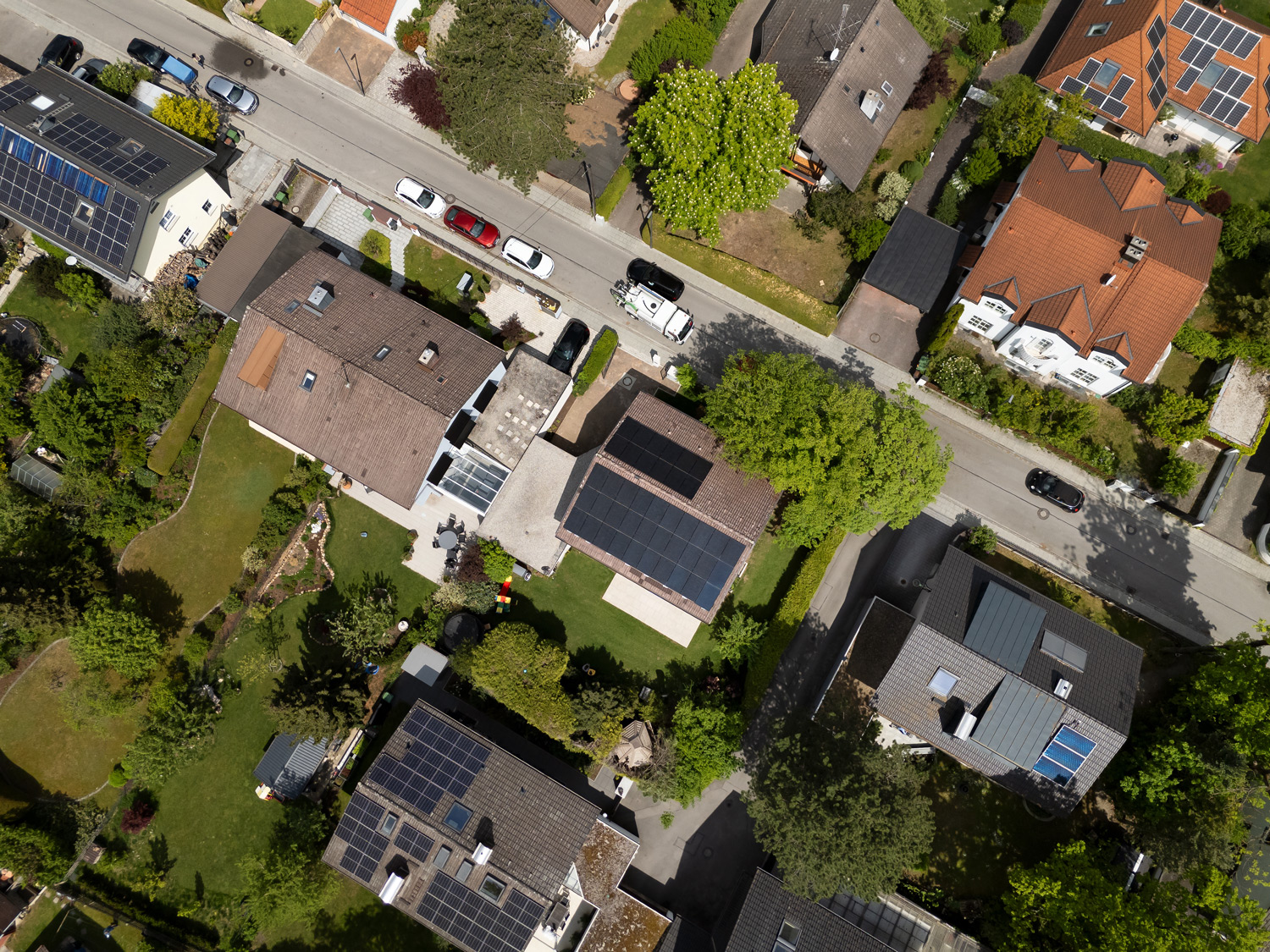
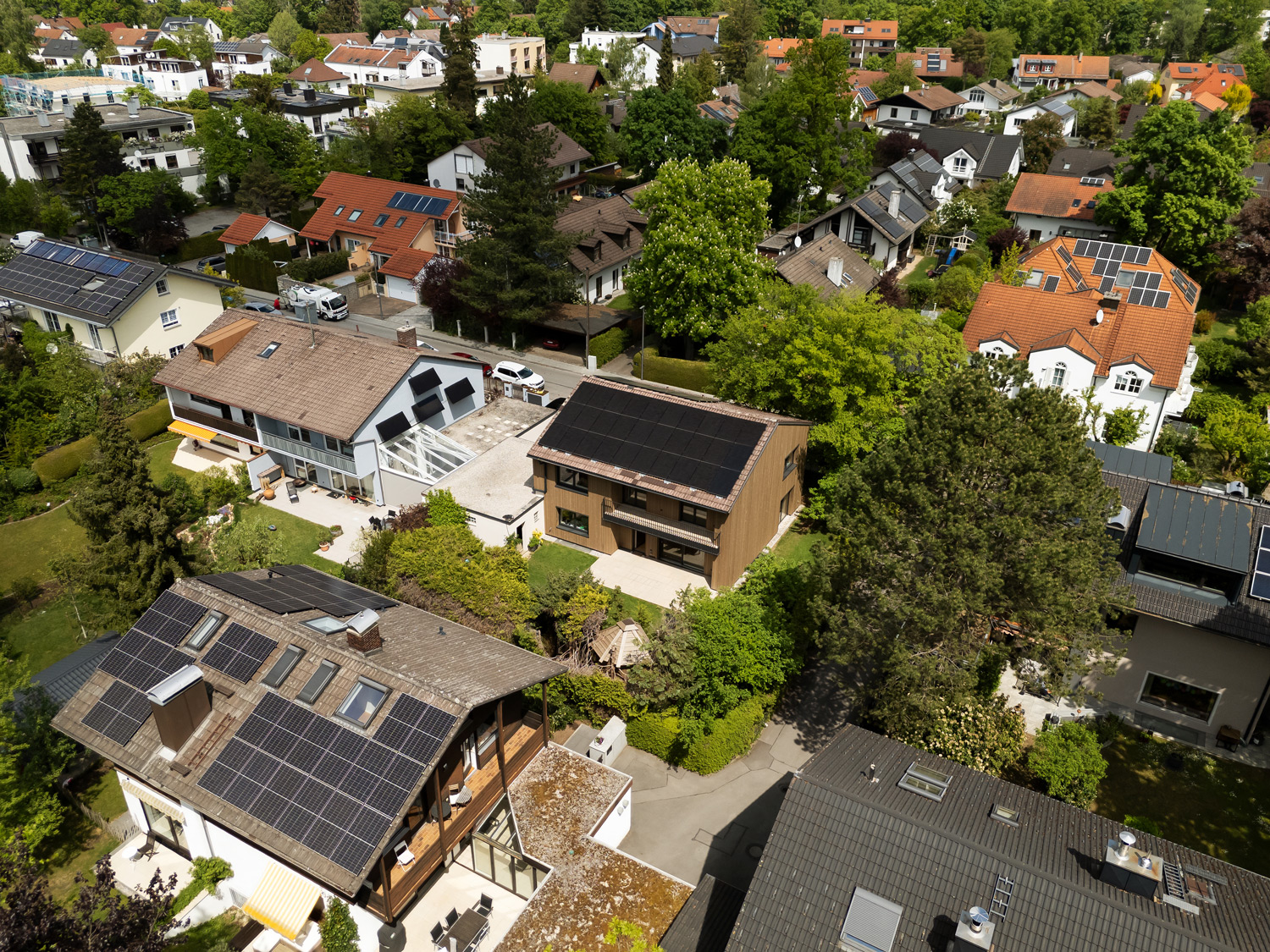
¯I Aerial view
Photo: Sorin Morar I¯
HausG_Luftbild

The single-family house

is located in the middle of a classic suburban area with a fine-grained urban structure. Since the size of the existing building, together with the large garage, was entirely sufficient for the family’s needs, no extension was added. The attic was also not further developed. Quite the opposite. In order to be future-proof and able to respond flexibly to the needs of the family, the building was divided into two fully functional residential units. Depending on the family situation, these can be used together or separately, without any structural measures.

_I
I_
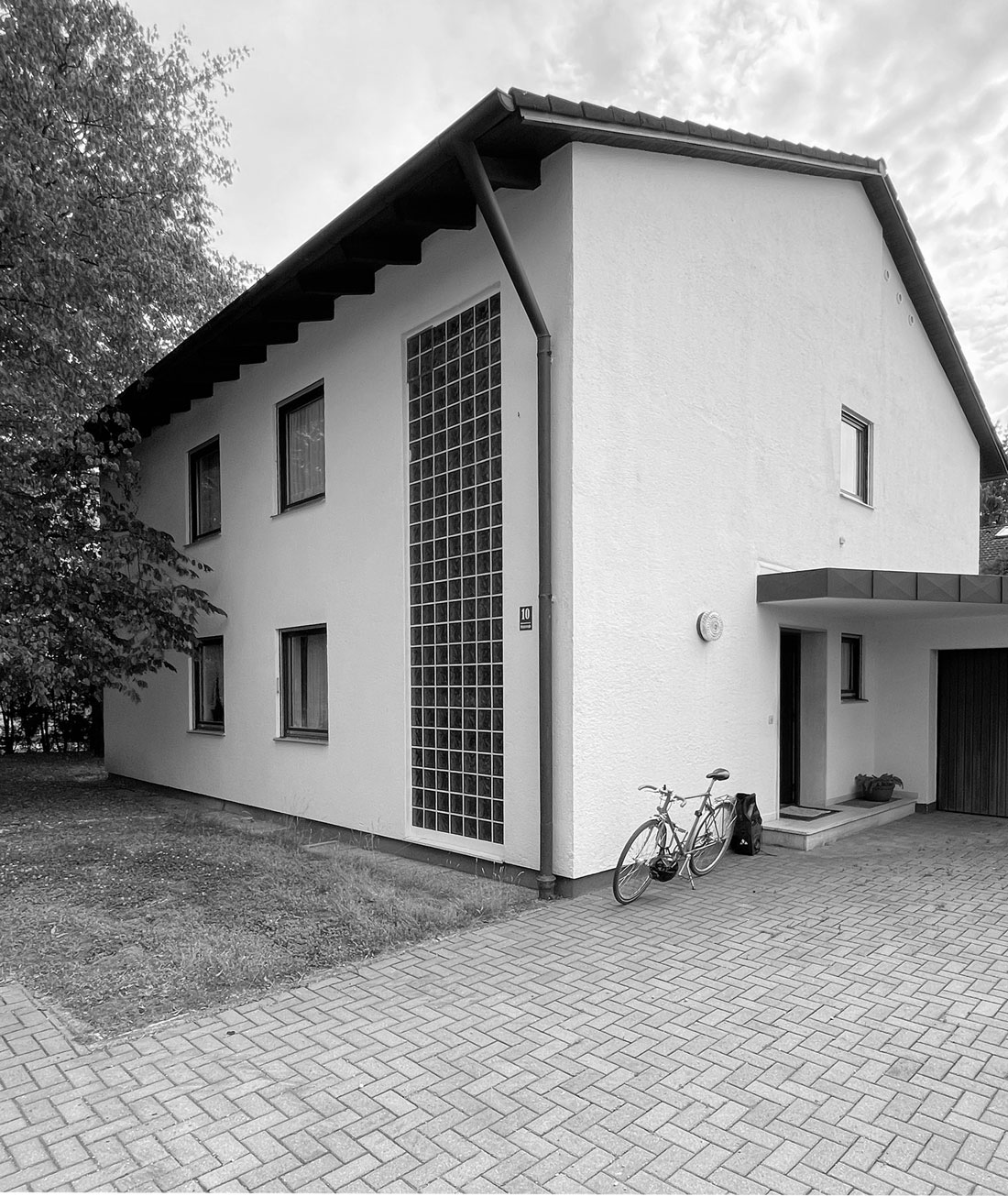
¯I View of the street entrance before the renovation
Photo: IFUB* I¯
HausG_Bestand_Strassenansicht

The existing building

featured classic elements from the 1970s, including a staircase with glass blocks. Overall, the building had been very well maintained and was handed over to the new owners in good condition. The well-resolved entrance situation beneath the garage roof, as well as most of the window openings, were retained.

_I
I_
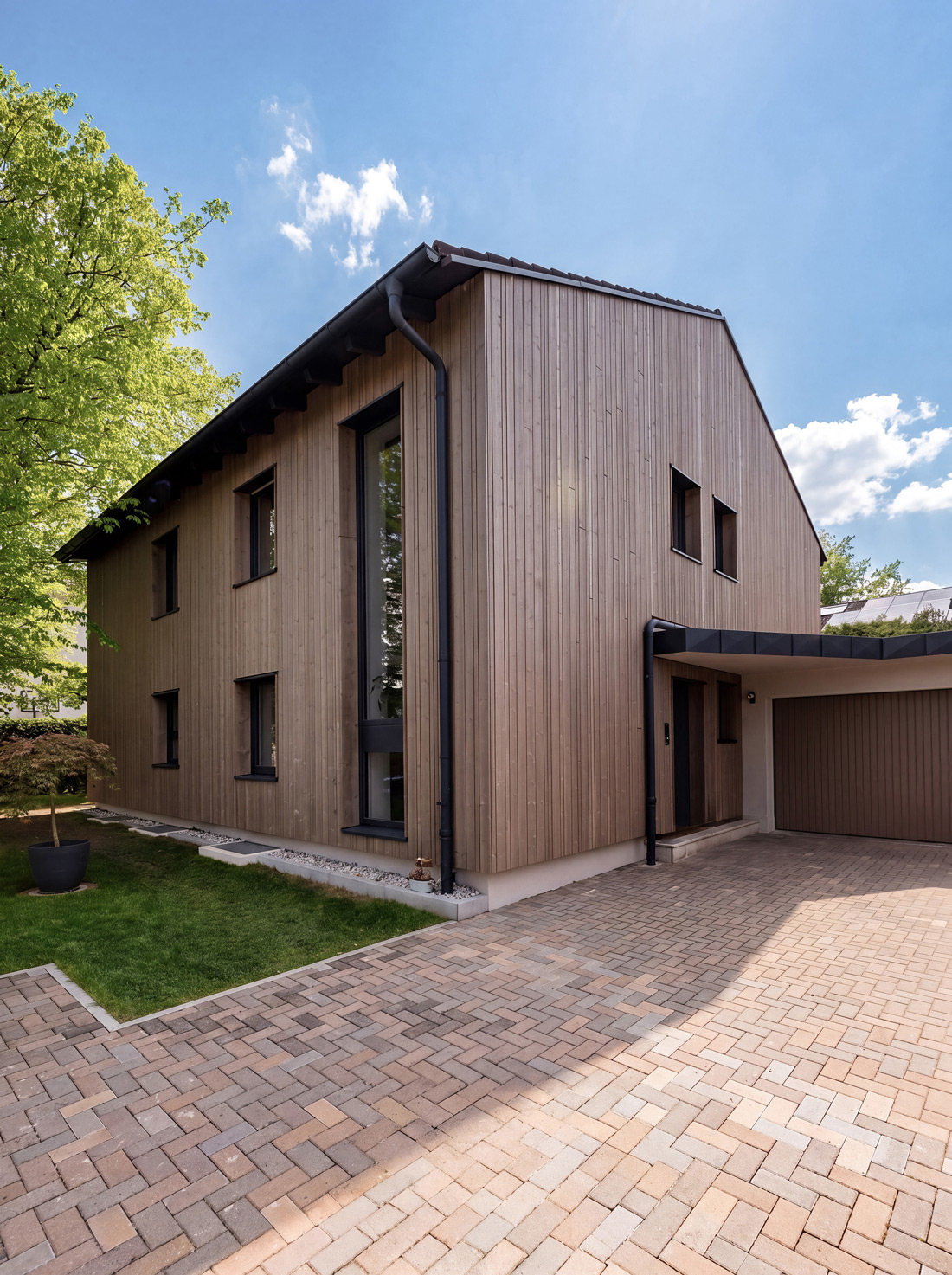
¯I View of the Entrance from the Street
Photo: Sorin Morar I¯

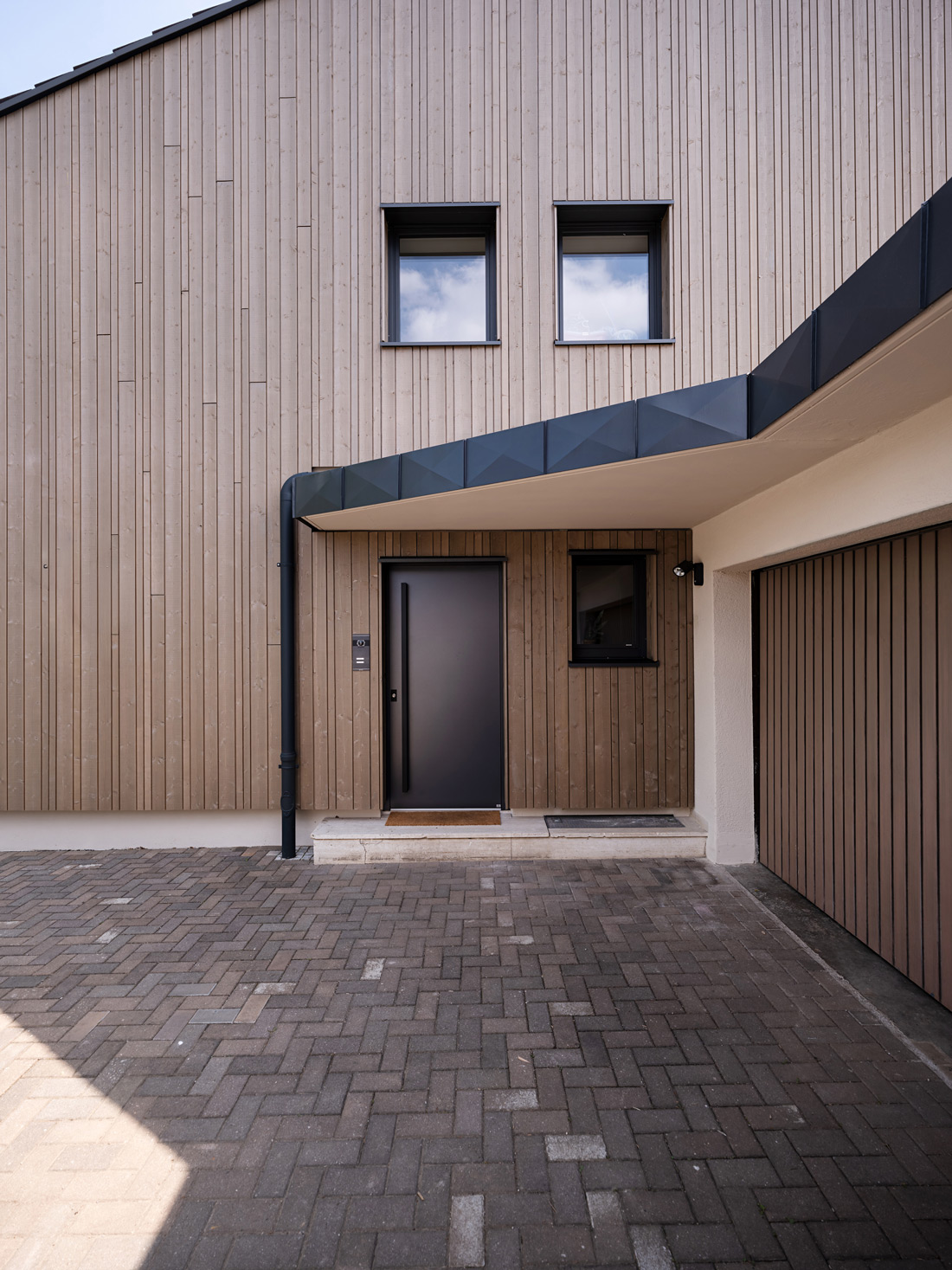
All windows were replaced with new triple-glazed 

wood-aluminium windows.

The staircase window, however, was replaced with a new clear glass window for both energy efficiency reasons and to allow more daylight into the space.

A continuous horizontal lower termination of the timber façade was important to the clients; therefore, the existing light wells were raised and the eaves strip was modelled accordingly. In the area of the paving, this results in a higher plinth that protects the timber façade from splash water.

The old paving in front of the entrance was stored on the side during construction and subsequently reinstalled.

HausG_Eingang
_I
I_
¯I Street-side view
Photo: Sorin Morar I¯
HausG_Strassenansicht

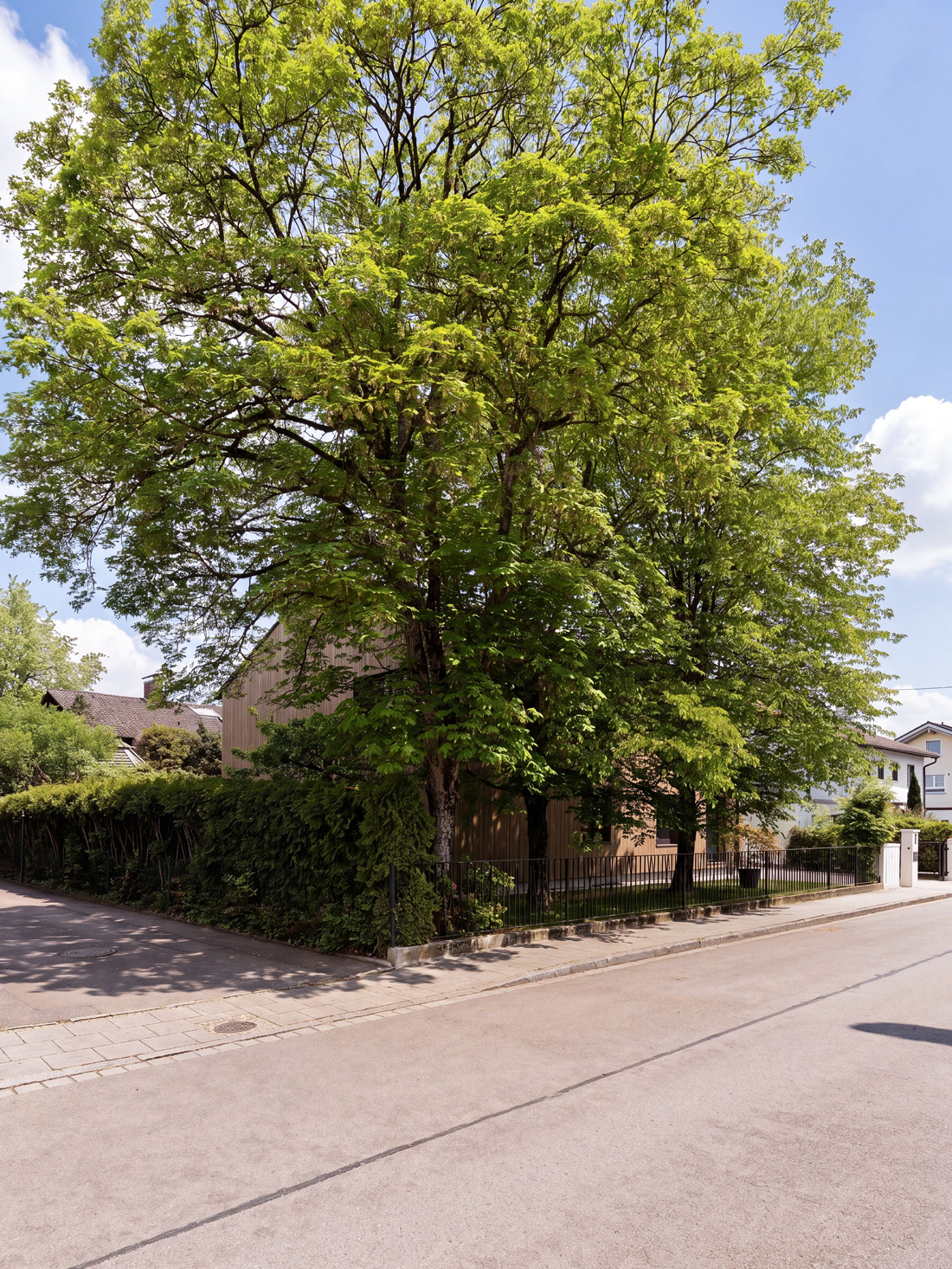
It is particularly beautiful in renovation projects when

existing trees

are present. In such cases, the gardens are green oases from day one and are especially well protected against overheating in summer. All of the magnificent trees on the site were preserved and survived the construction work unharmed.

The old fence was repaired and retained despite damage caused by an excavator. It gives the garden the necessary transparency and, in its design, refers to the origins of the house.

_I
I_
¯I South Elevation
Photo: Sorin Morar I¯
HausG_Strassenansicht

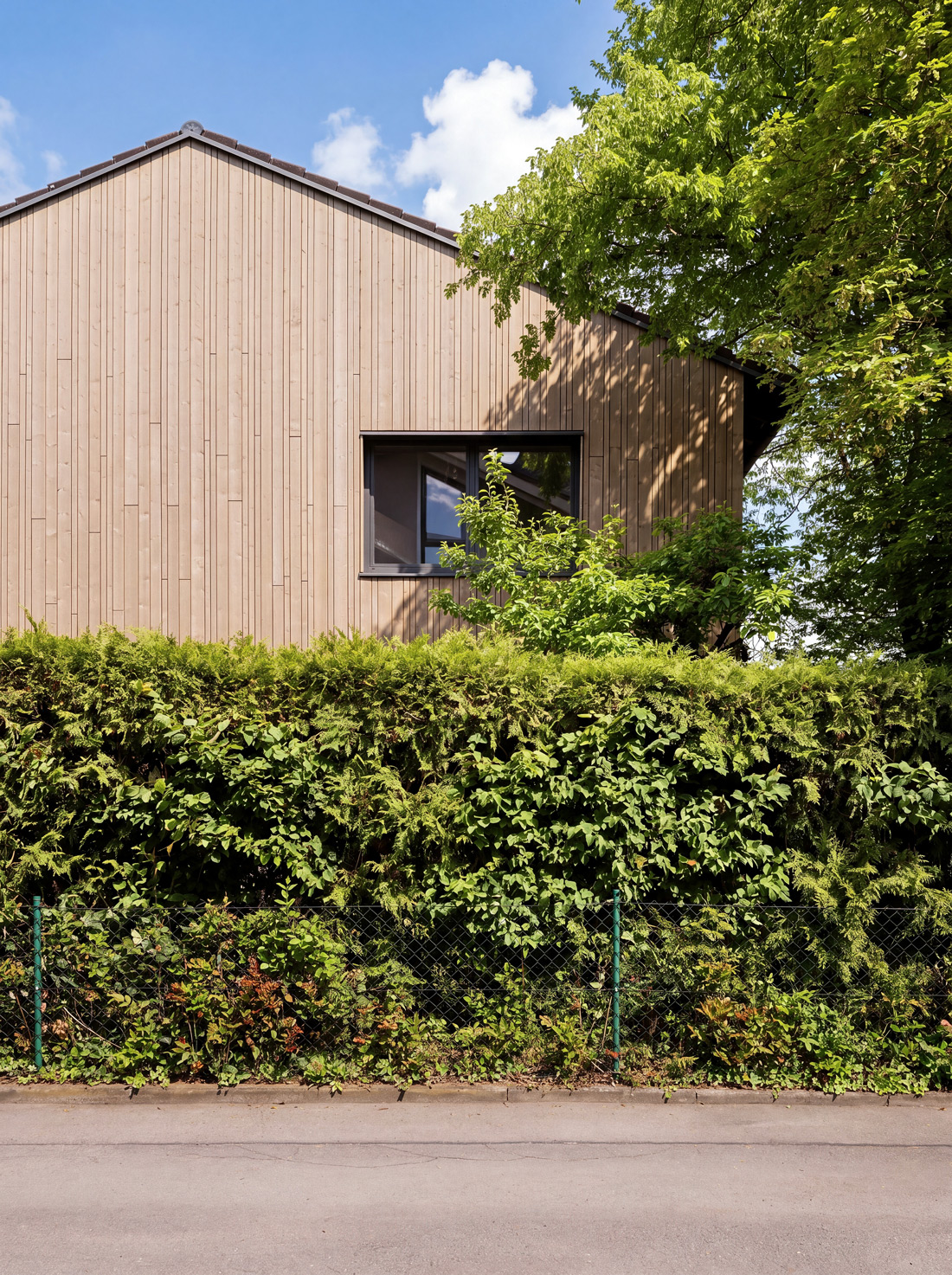
The façade was clad in glazed 

spruce timber cladding

with horizontally staggered joints. The energy upgrade was carried out using cellulose blown-in insulation, installed within a timber frame construction fixed onto the existing façade, with a wood-fibre underlay board. Throughout the entire build-up, ecological building materials were used.

_I
I_
¯I View from the garden
Photo: Sorin Morar I¯

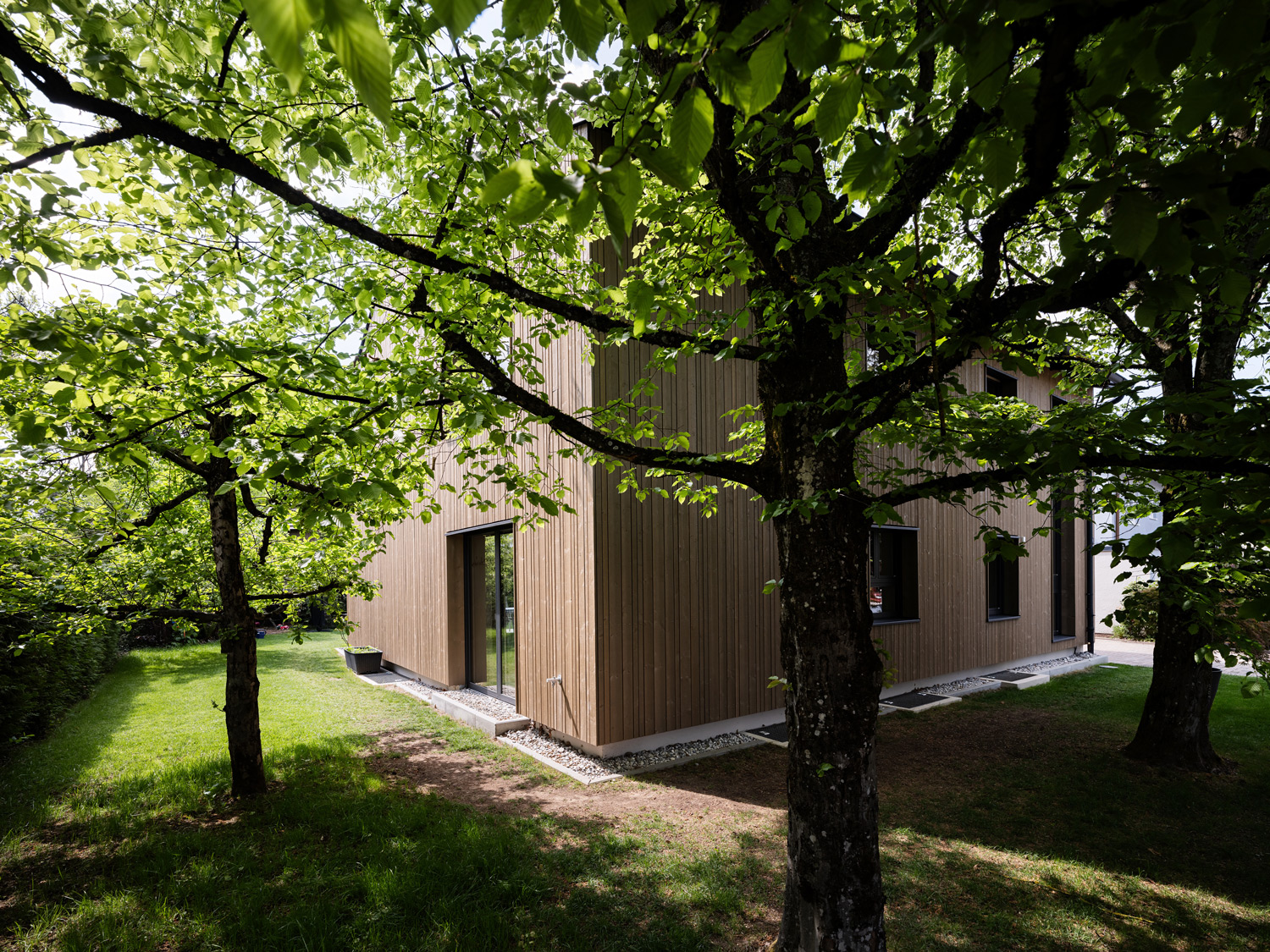
The windows were largely retained in their original positions and dimensions, with only a few exceptions. At the south-facing window on the ground floor, however, the parapet was removed and a new

floor-to-ceiling window

was installed to allow direct access from the dining area to the garden.

HausG_Ansicht
_I
I_
¯I Entrance situation
Photo: Sorin Morar I¯
HausG_Eingang

The new colour scheme

is based on the existing building. All new metal elements such as window frames and the front door, as well as downpipes and roof edges, were selected by the clients in a dark grey tone, matching the existing metalwork of the garage, and harmonise well with the new timber façade and the old paving stones.

A new cistern collects rainwater for garden use—an especially useful feature during dry summers. In order to make maximum use of the available water volume, what is essentially a very pragmatic routing of the downpipes has been integrated in a visually considered way.

_I
I_
¯I View of the garden before the renovation
Photo: IFUB* I¯
HausG_Bestand_Rueckansicht

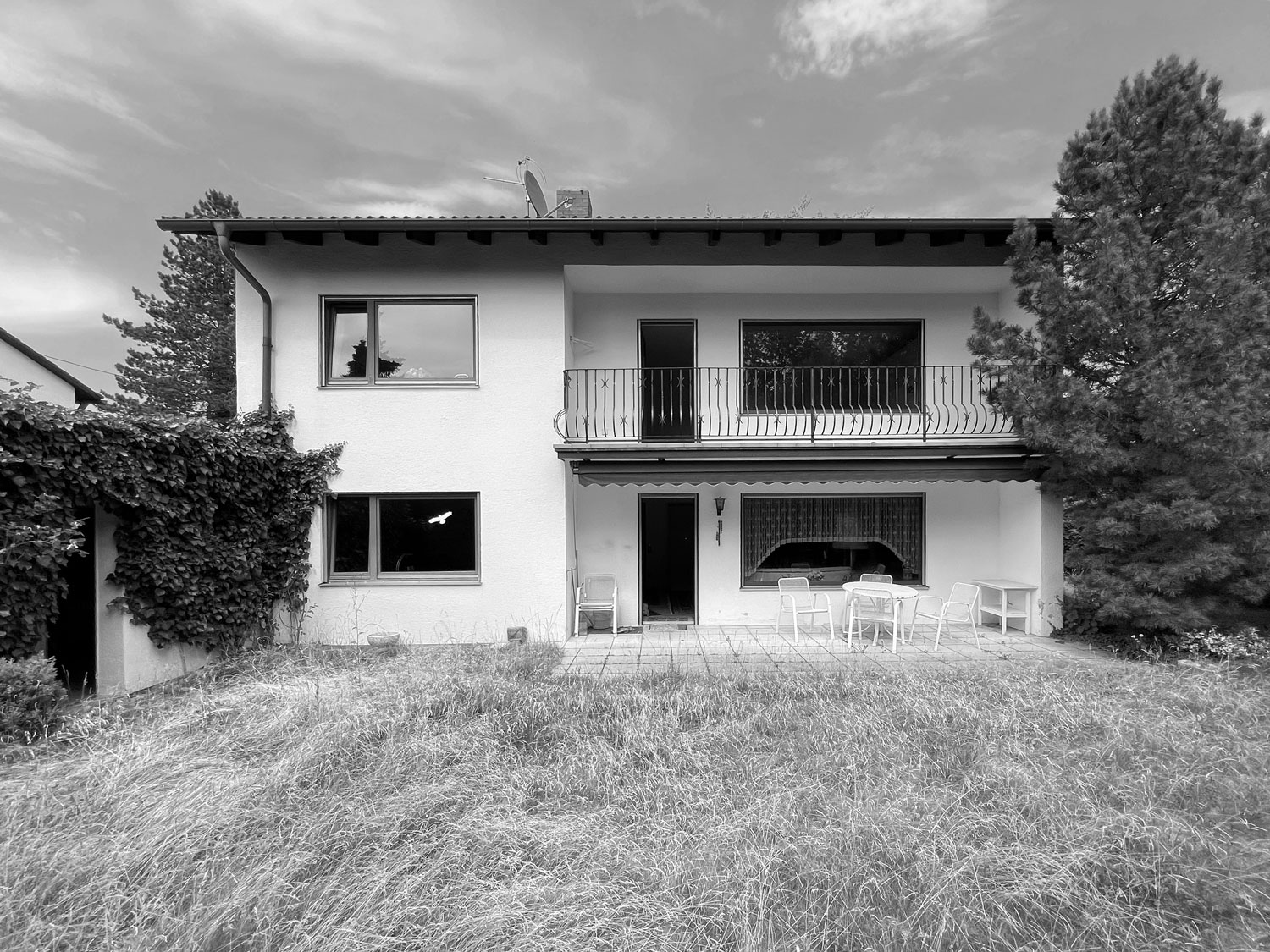
The south façade of the existing building

featured a classic loggia/balcony combination, for which an extension was also discussed. For several reasons, this option was rejected. On the one hand, it made a building permit unnecessary; on the other hand, the additional square metres were not required, and the roofing of the terrace already provided sufficient sun and rain protection.

_I
I_
¯I View of the garden
Photo: Sorin Morar I¯

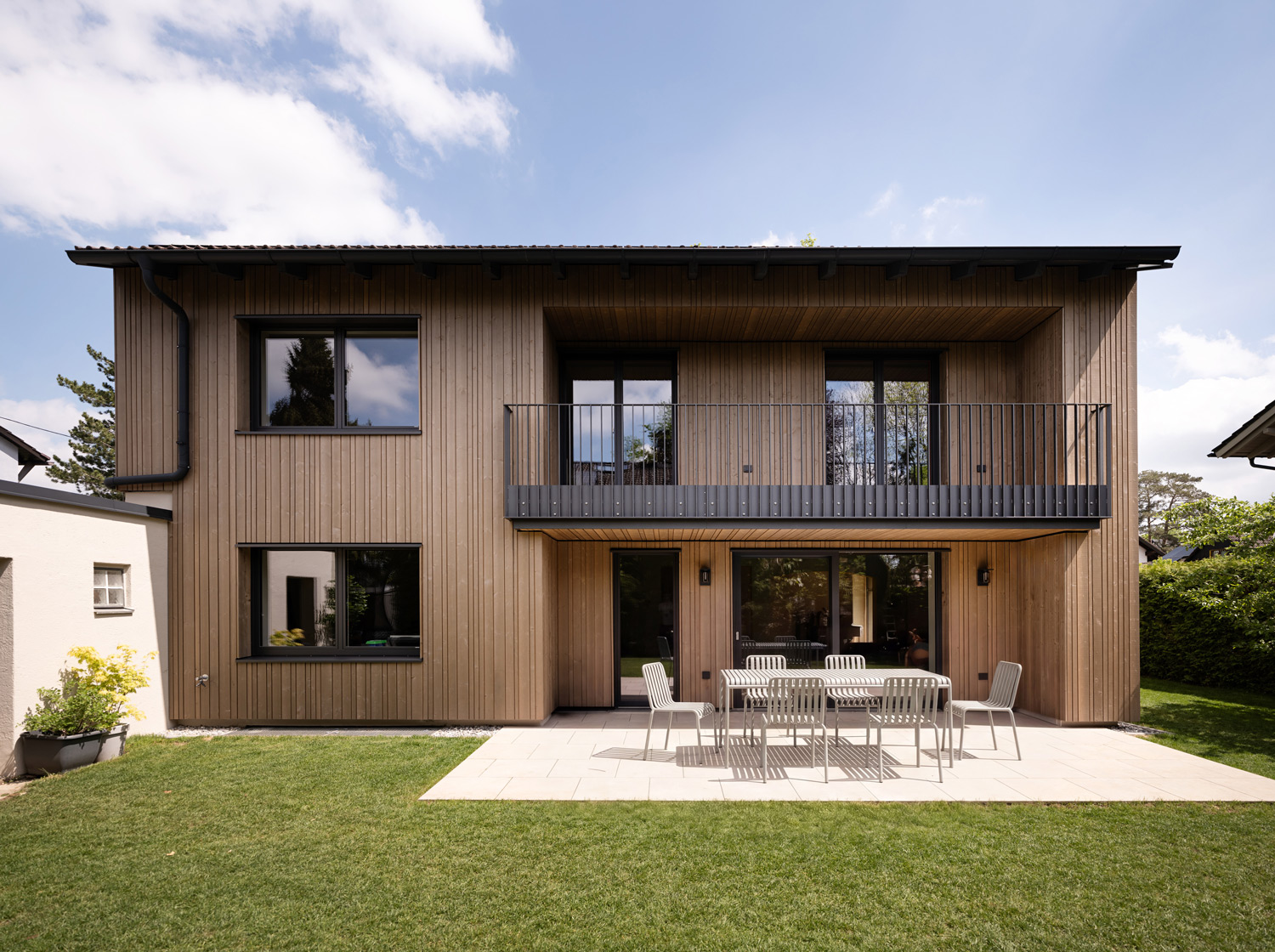
To open up the living space more towards the garden, the windows on the

garden façade

on the ground floor were enlarged. To ensure harmony between the siblings, two new, equally sized window elements were installed on the upper floor. The balcony and loggias were integrated into the thermal envelope and, at the clients’ request, fitted with a new, simple balcony railing matching the façade. The garage was only repainted and continues to define the edge of the garden without merging awkwardly with the house.

HausG_Ansicht
_I
I_
¯I Loggia
Photo: Sorin Morar I¯
HausG_Balkon

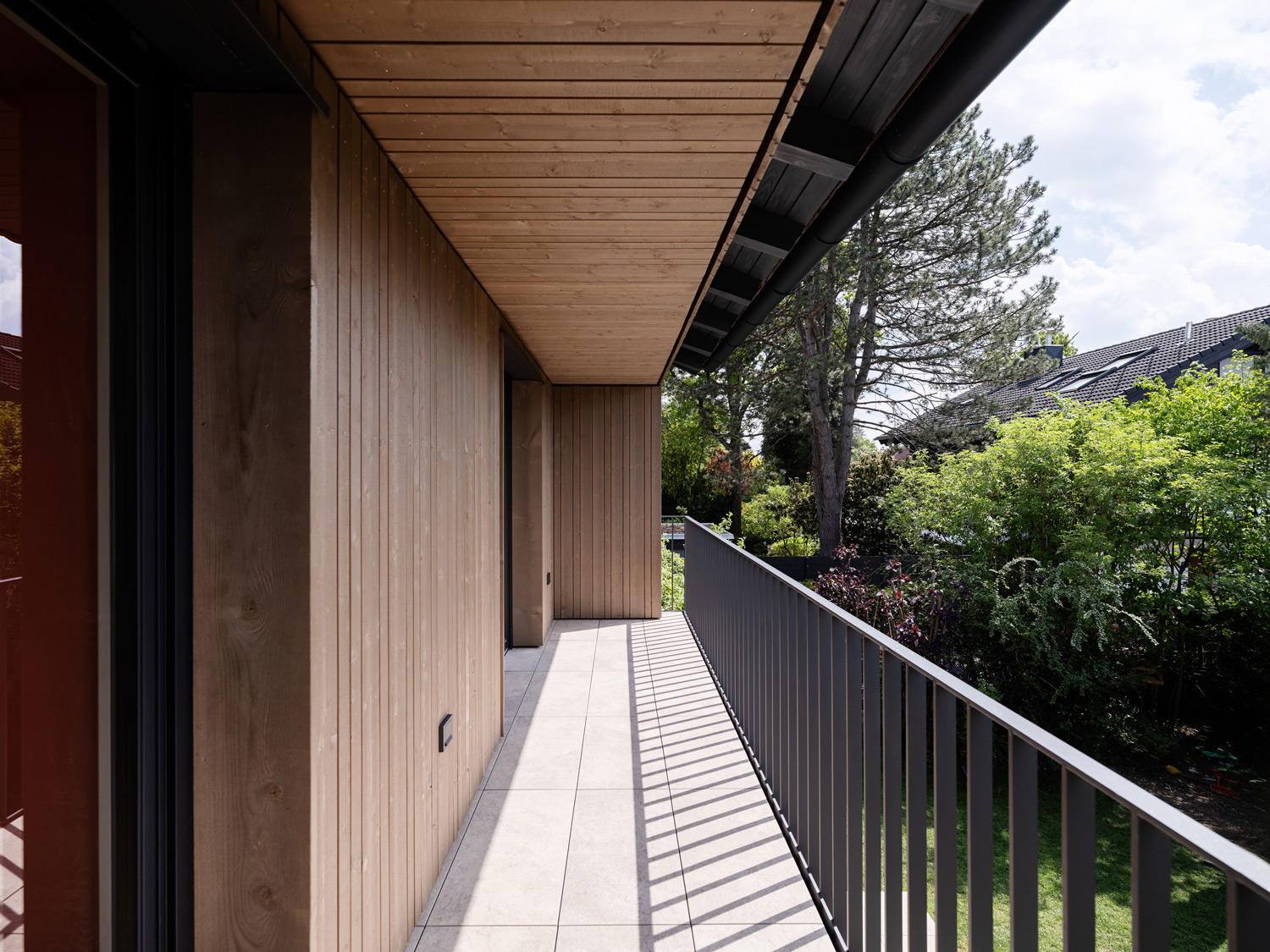
The loggia

and the balcony slab were insulated and seamlessly integrated into the façade. In this way, the cladding pattern continues underneath the soffit of the roof. The existing rafters beneath the canopy were painted in the same colour as the window frames.

_I
I_
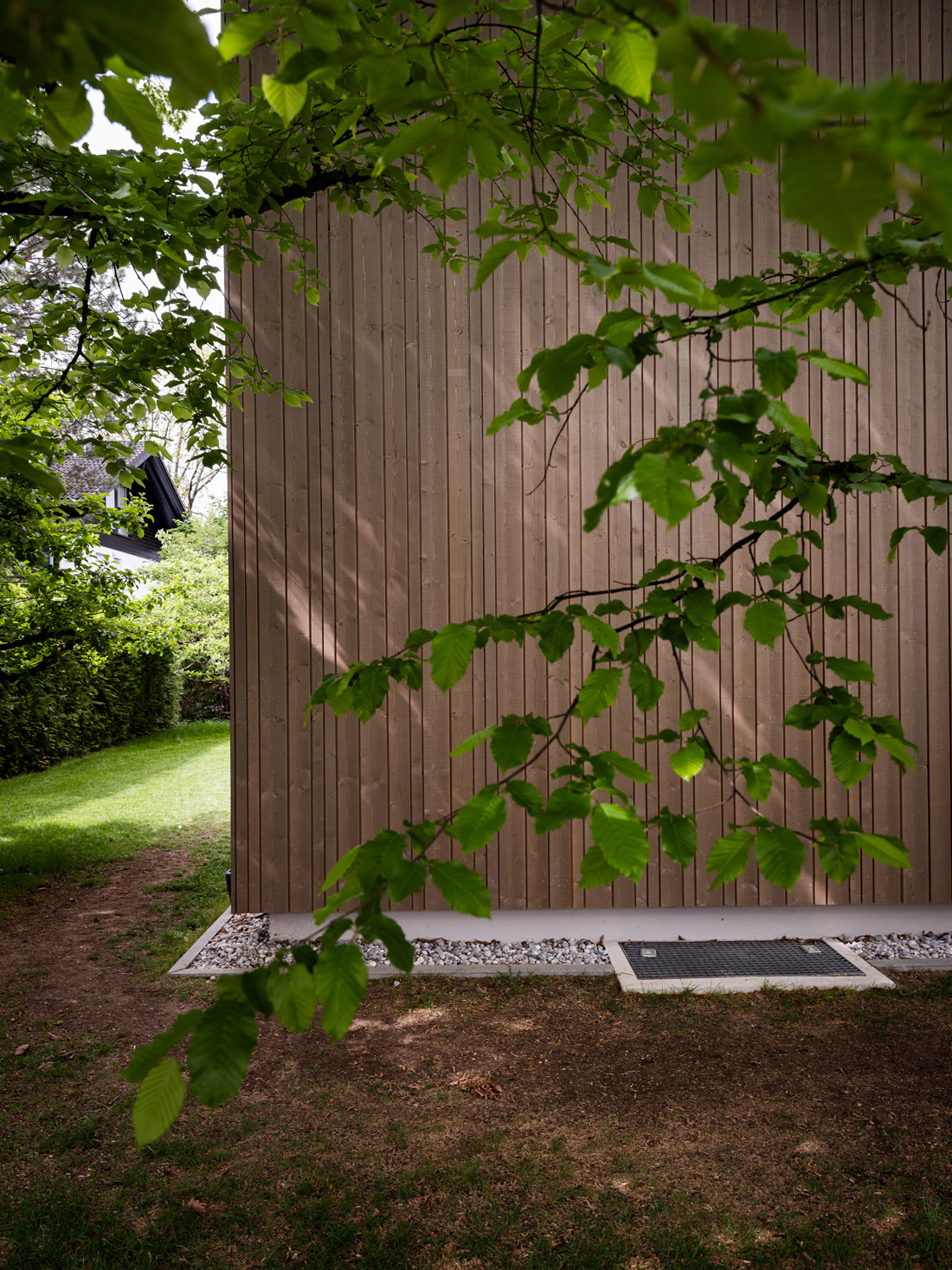
¯I Corner of the building
Photo: Sorin Morar I¯

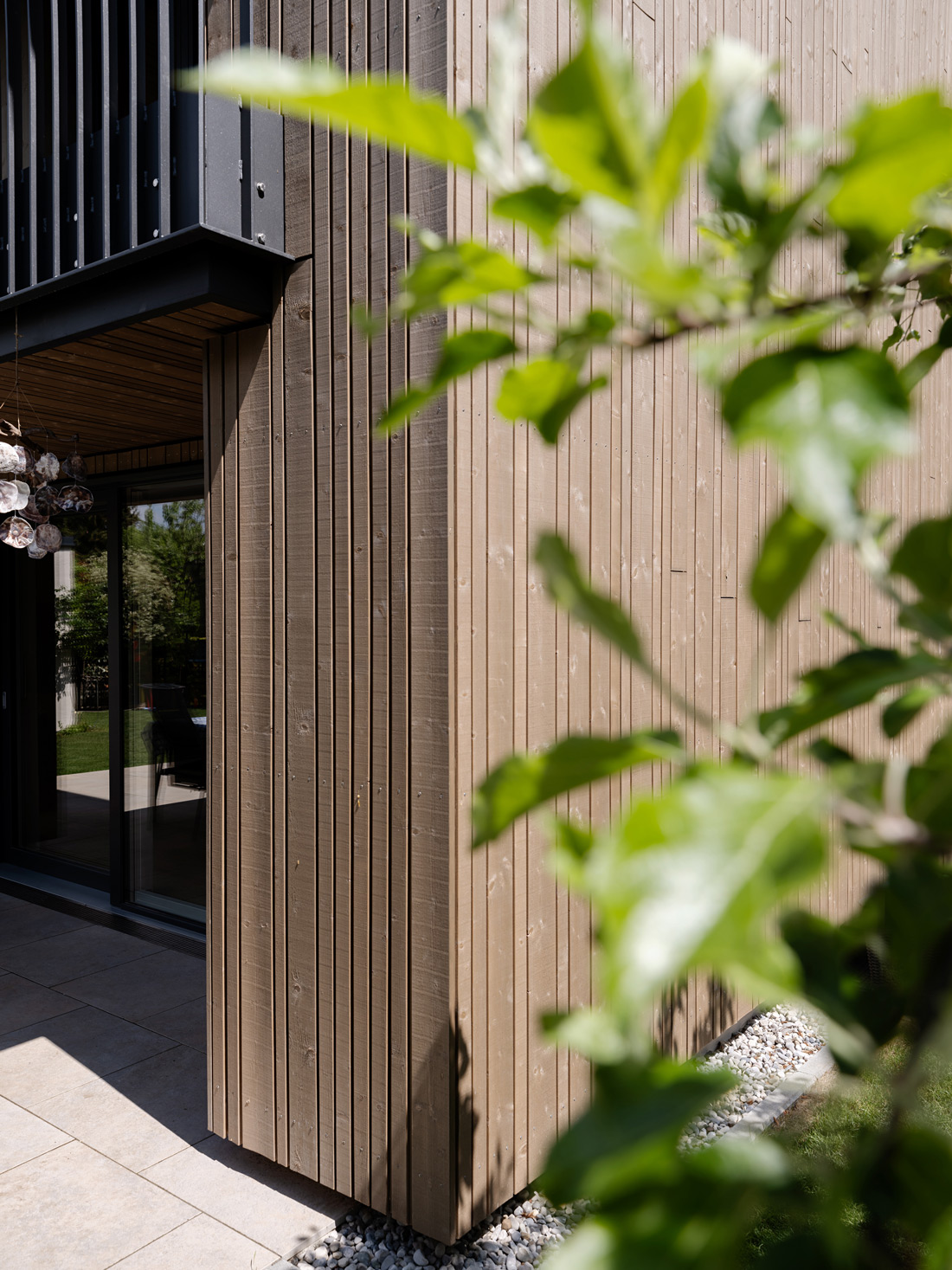
The timber cladding is executed with

varying board widths,

which simplify a harmonious transition at the building corners.

HausG_Fassade
_I
I_
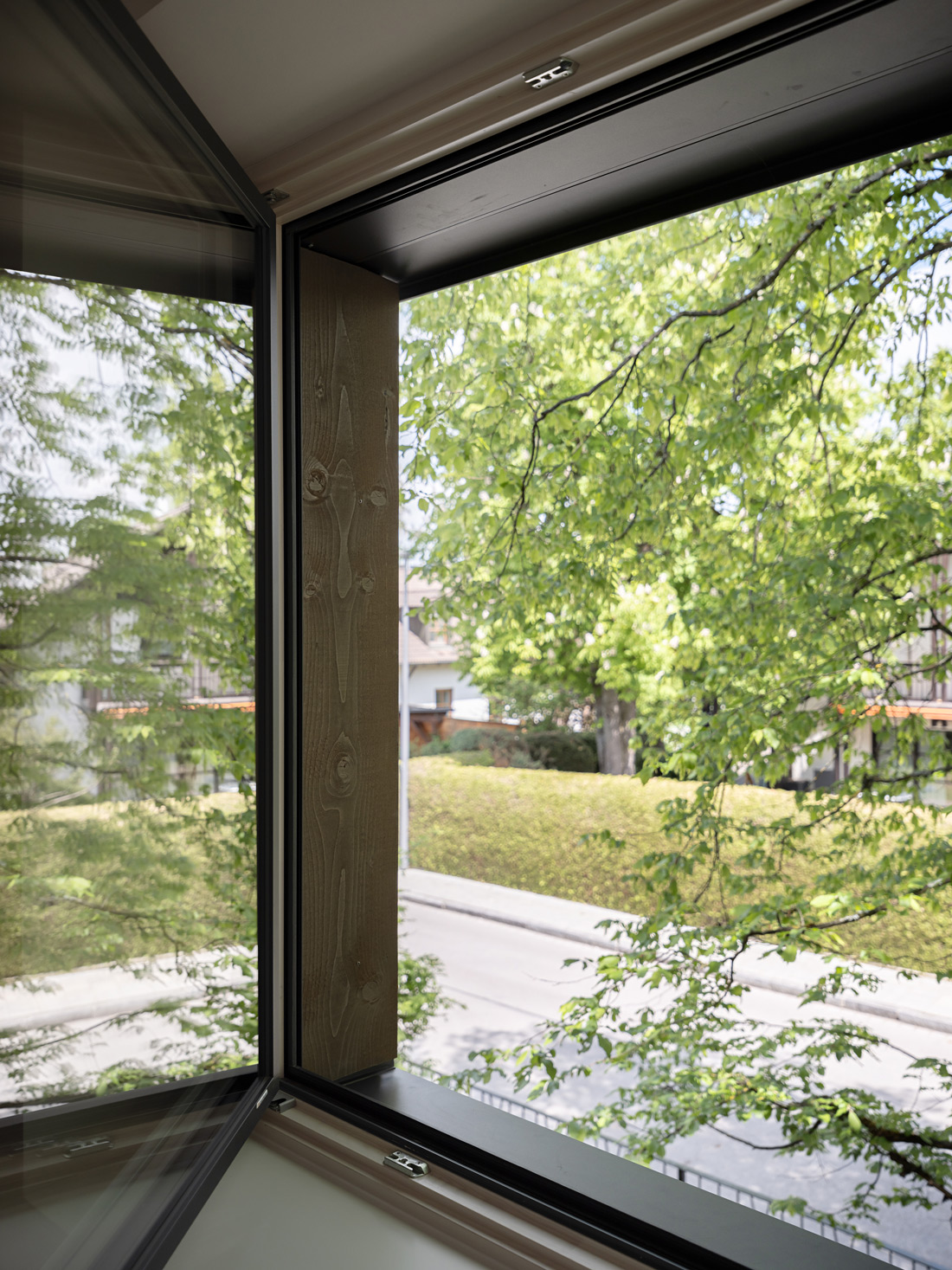
¯I Window
Photo: Sorin Morar I¯

A close-up view of a

window

detail. The sun shading is concealed above and behind the façade. The reveal board covers the guide rail of the shading system. As the window is mounted on the exterior side of the façade, it creates a generous internal window sill that can be used as a functional surface.

HausG_Fenster_Detail
_I
I_
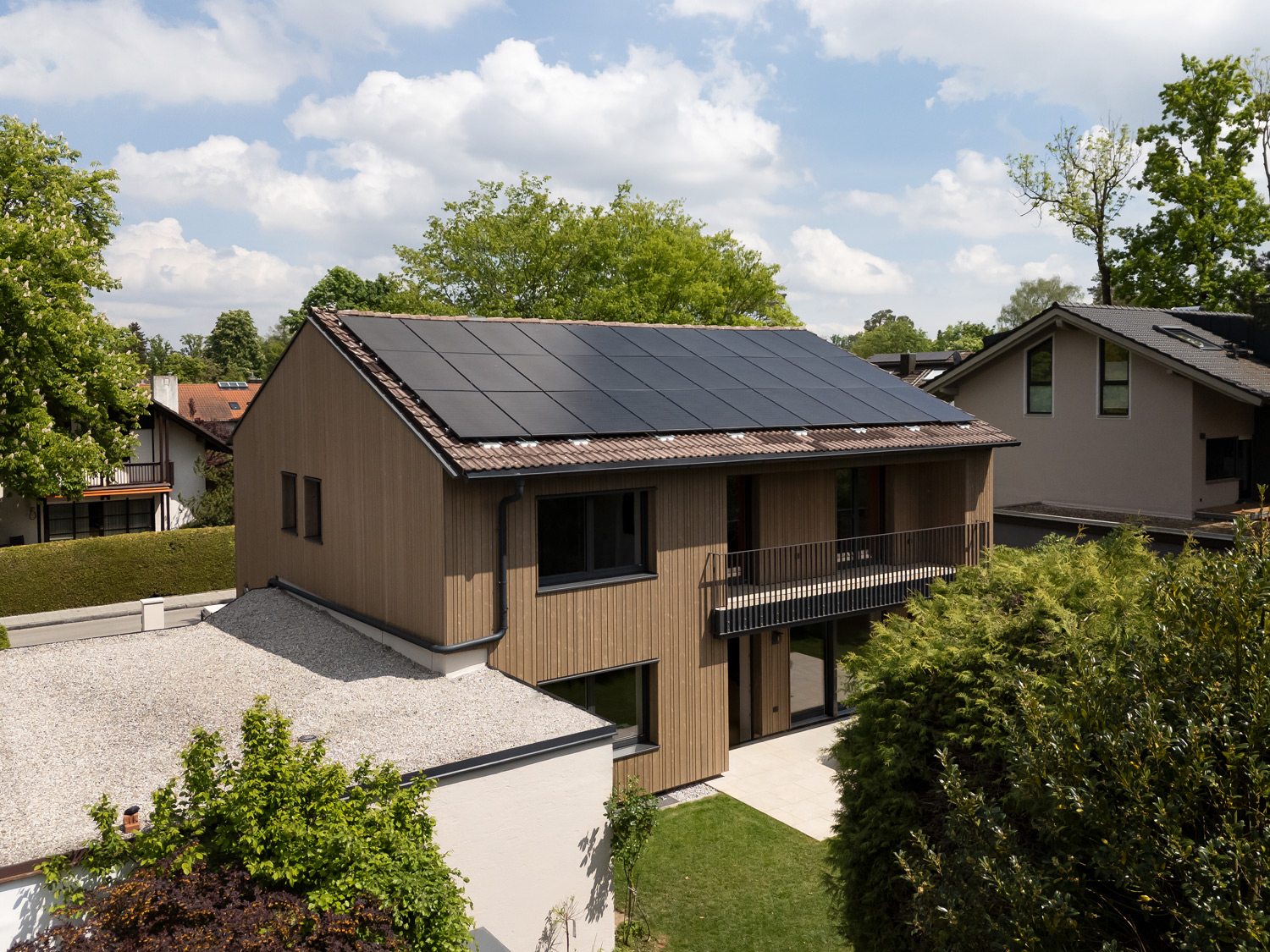
¯I bird's-eye view
Photo: Sorin Morar I¯
HausG_Ansicht

For ecological as well as cost-related reasons, the existing roof, including the roof tiles, was retained, and only the top floor ceiling was insulated. The verge was extended to accommodate the façade insulation and was fitted with new metal flashing. The new

photovoltaic system

not only supports the air-to-water heat pump during operation, but also reduces overall electricity consumption and can be used to charge the electric car in the garage.

_I
I_
¯I façade
Photo: Sorin Morar I¯

Together with the new façade insulation and the windows, the insulation of the basement ceiling and the ceiling above the upper floor, the air-to-water heat pump and the photovoltaic system on the roof, as well as the decentralised ventilation system with heat recovery, an excellent

KfW Efficiency House 55 EE

standard was achieved.

_I
I_
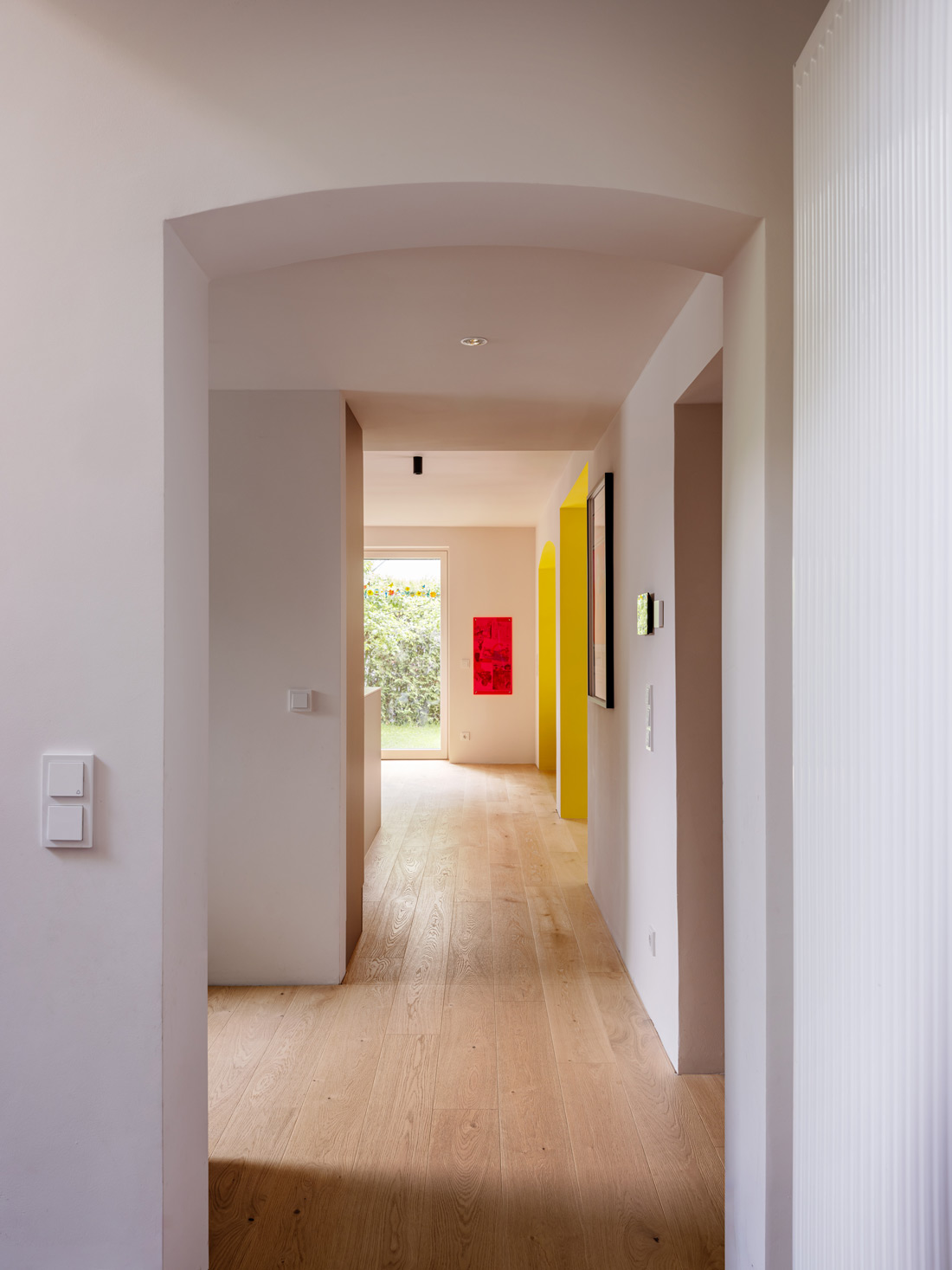
¯I View from the entrance
Photo: Sorin Morar I¯
HausG_Eingang_Flur
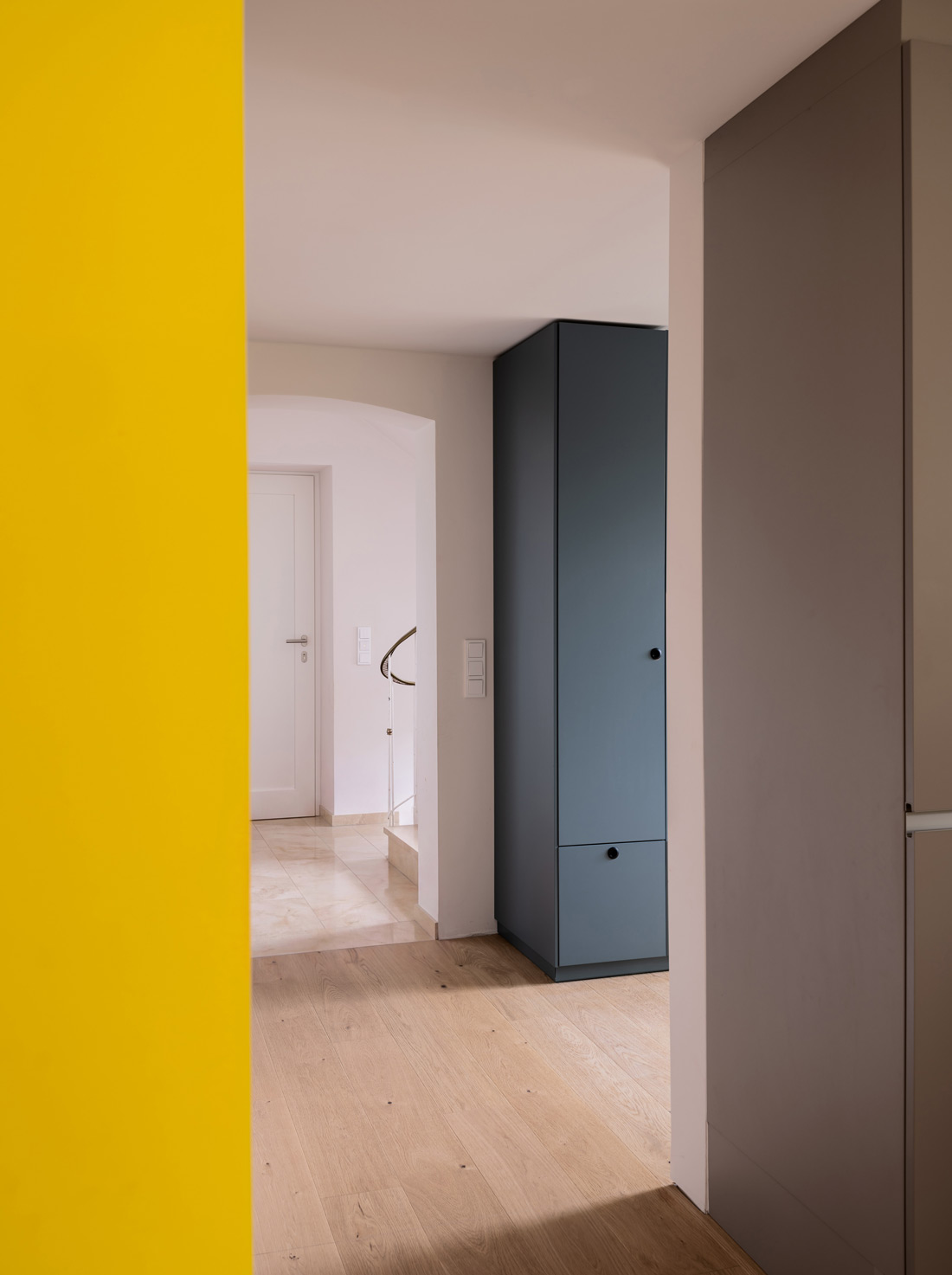
One of the biggest changes to the interior was the removal of the old, very small kitchen on the ground floor and the conversion of the space into an open cloakroom located to the left of the hallway. This creates a sense of

transparency and openness

that is immediately noticeable from the entrance.
_I
I_
¯I cloakroom
Photo: Sorin Morar I¯

Through the open cloakroom, light enters the previously dark hallway, which is now part of the living space. The wall of the former kitchen was removed, which made it possible to optimise the space for the

cloakroom

and enlarge the kitchen and dining room.

HausG_Garderobe
_I
I_
¯I living cooking dining
Photo: Sorin Morar I¯

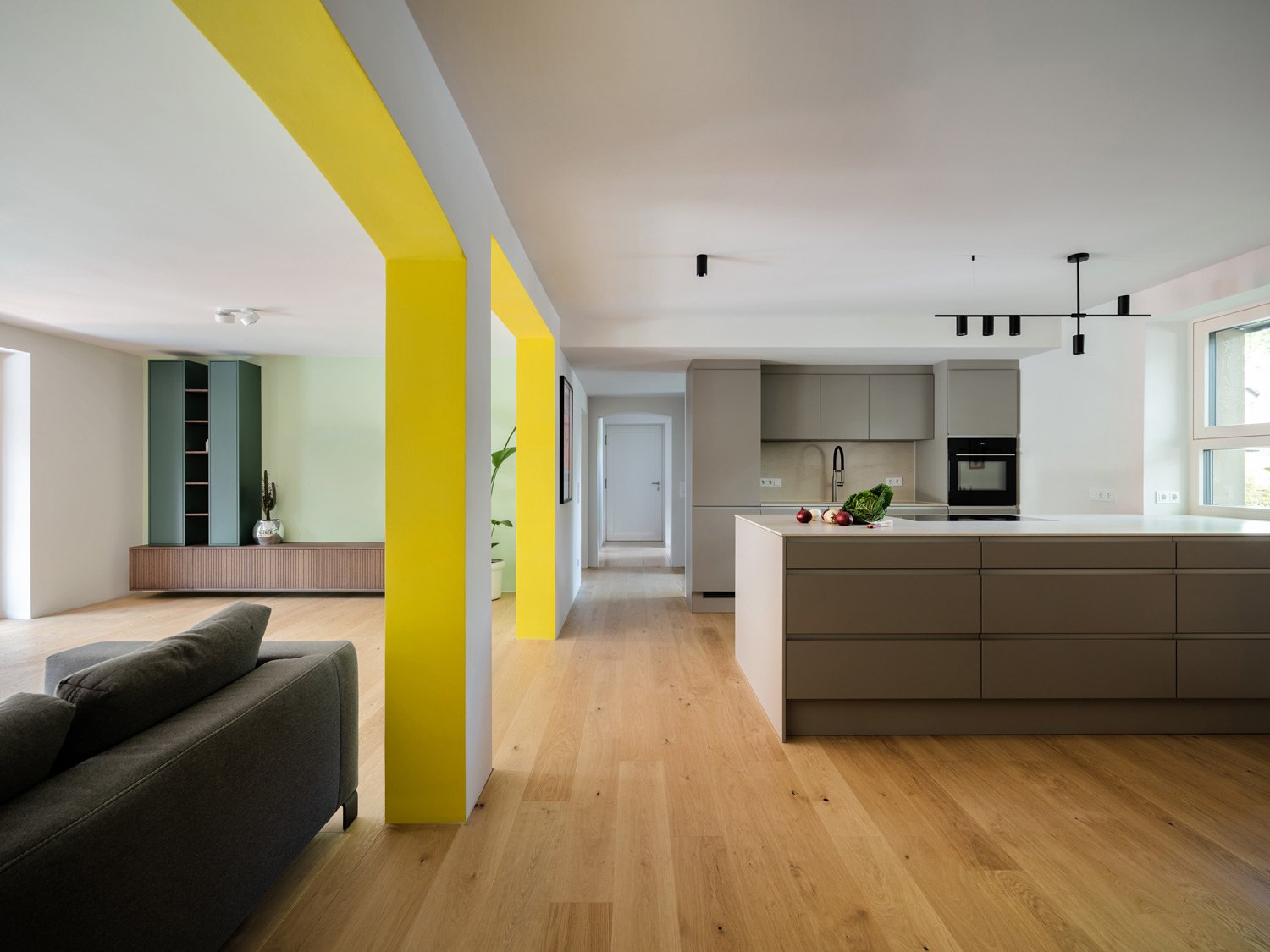
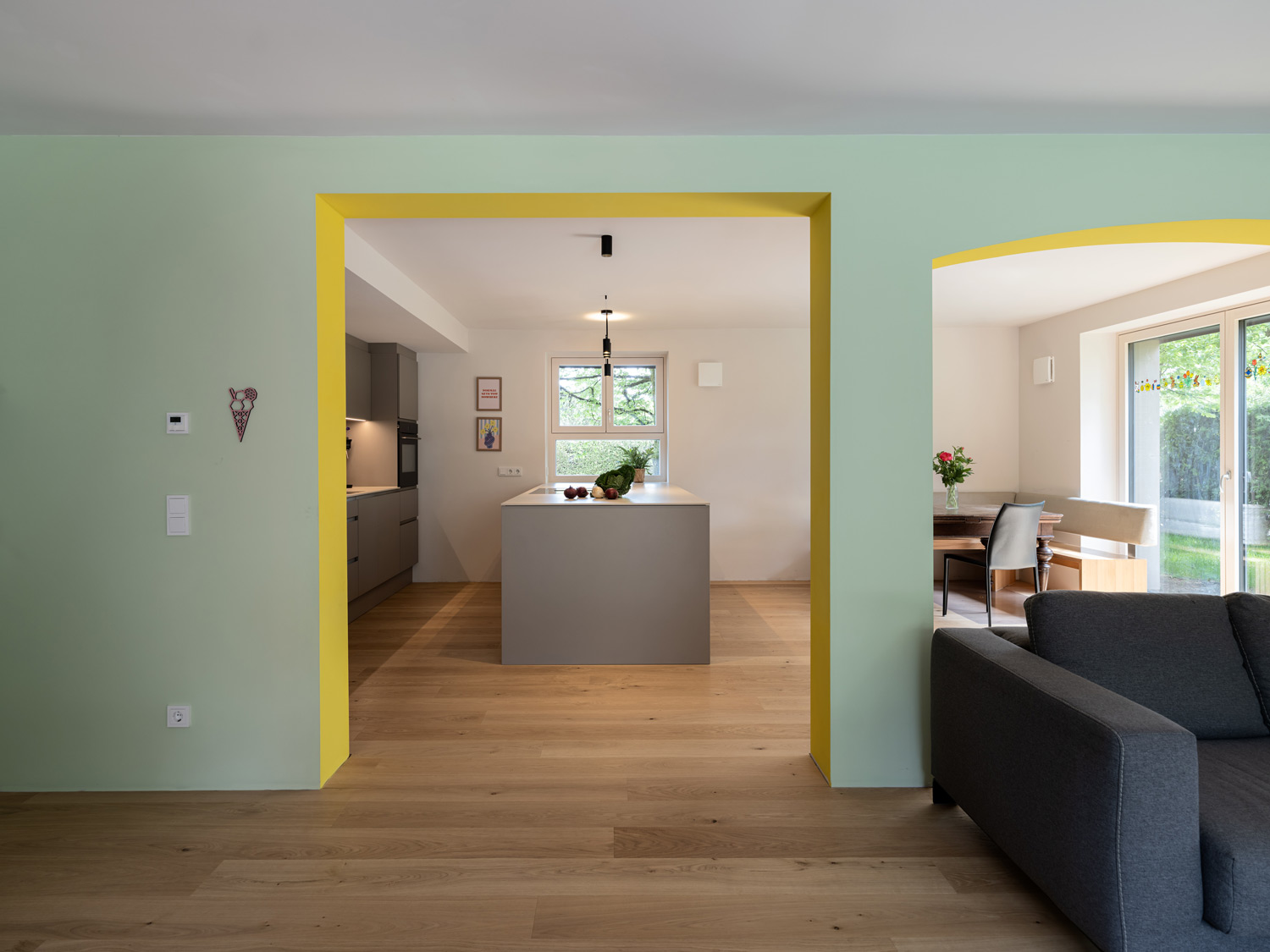
Through a few targeted interventions in the floor plan, the old room layout was transformed into a modern, open living concept. A new opening, in combination with the existing arched opening, now connects

living, cooking and dining.

The resulting large space allows views towards three façades of the house – and therefore in three different directions. From the view from the kitchen onto the street, to the access to the southern garden, and all the way to the view through the new large sliding door onto the terrace.

HausG_Wohnzimmer_Kueche
_I
I_
¯I living cooking dining
Phot: Sorin Morar I¯

At IFUB*, we are pleased when our clients actively contribute to the project.

The colours and materials of the interior spaces,

as well as the kitchen and the built-in furniture, were designed by the clients themselves and, in some cases, also implemented by them.

_I
I_
¯I shower on the ground floor
Photo: Sorin Morar I¯
HausG_Badezimmer

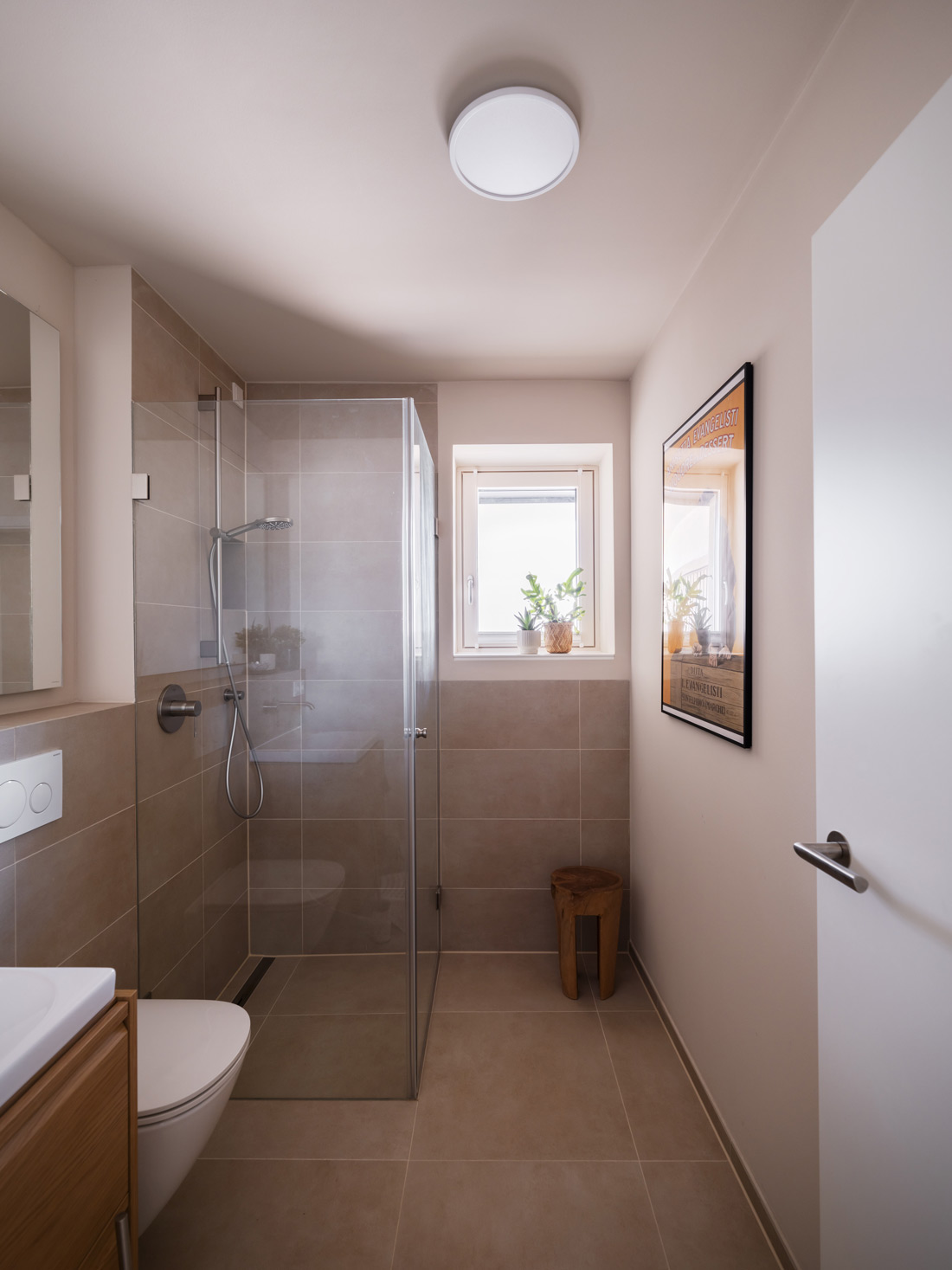
The old toilet on the ground floor was enlarged and extended with a flush-to-floor shower. It is intended for guests, but is also well suited for the morning rush in a large family. When the two apartments are used separately, the shower bathroom serves as a fully functional and, above all,

age-appropriate bathroom

for the lower apartment. The visual design of the bathrooms was also entirely carried out by the clients themselves.

_I
I_
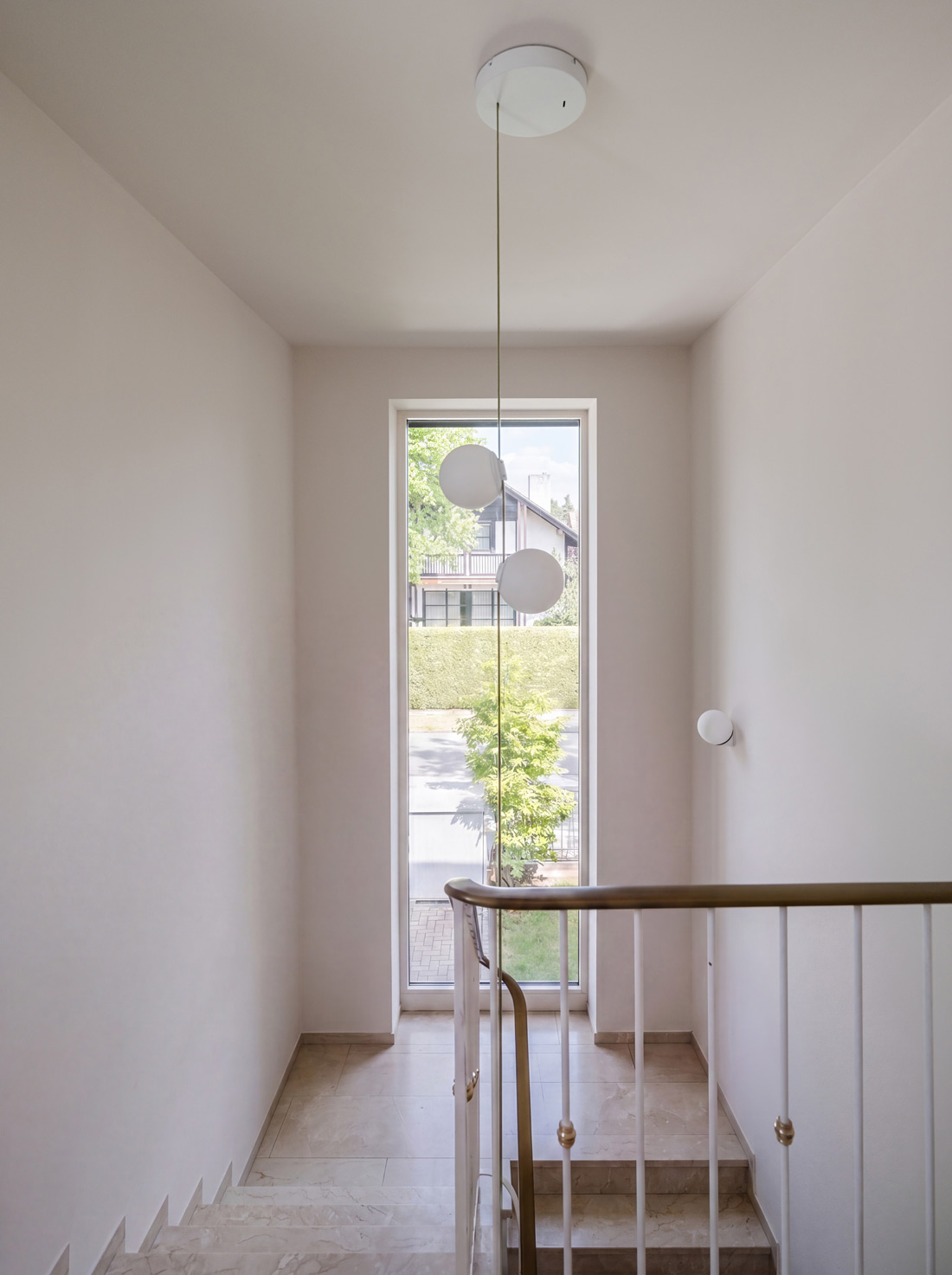
¯I Staircase
Photo: Sorin Morar I¯

The staircase was completely preserved, with the exception of the new window. The high-quality natural stone and the design of the railings reflect the taste of the time, but also blend harmoniously into the overall design of the house.

The staircase

plays a key role in the new concept. So the house was divided into two independent residential units. As long as the three children live in the house, both apartments are used and the staircase then connects the apartments. If the children have moved out of the house, one of the two apartments can be rented out or used by the (then adult) children as a separate apartment and then the staircase is purely a circulation space.

HausG_Treppe
_I
I_
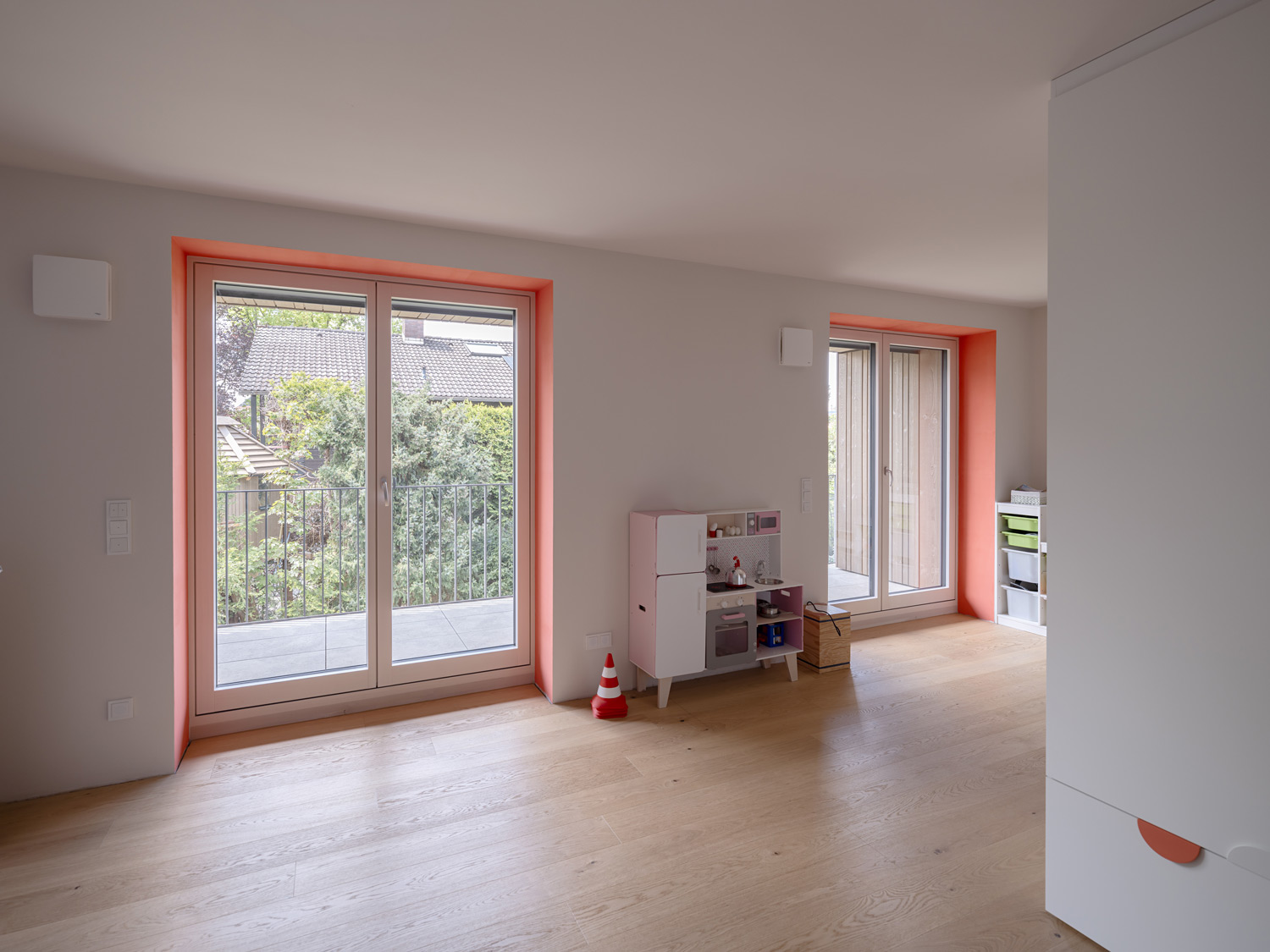
¯I children’s room
Photo: Sorin Morar I¯

As long as the children are still small, the

children’s room

facing the balcony is designed as one large space shared by two children. As the need for privacy increases over the years, a simple partition wall can be installed – the screed has already been executed with acoustic separation for this purpose, and two identical windows have been prepared.

HausG_Schlafzimmer_Kinder
_I
I_
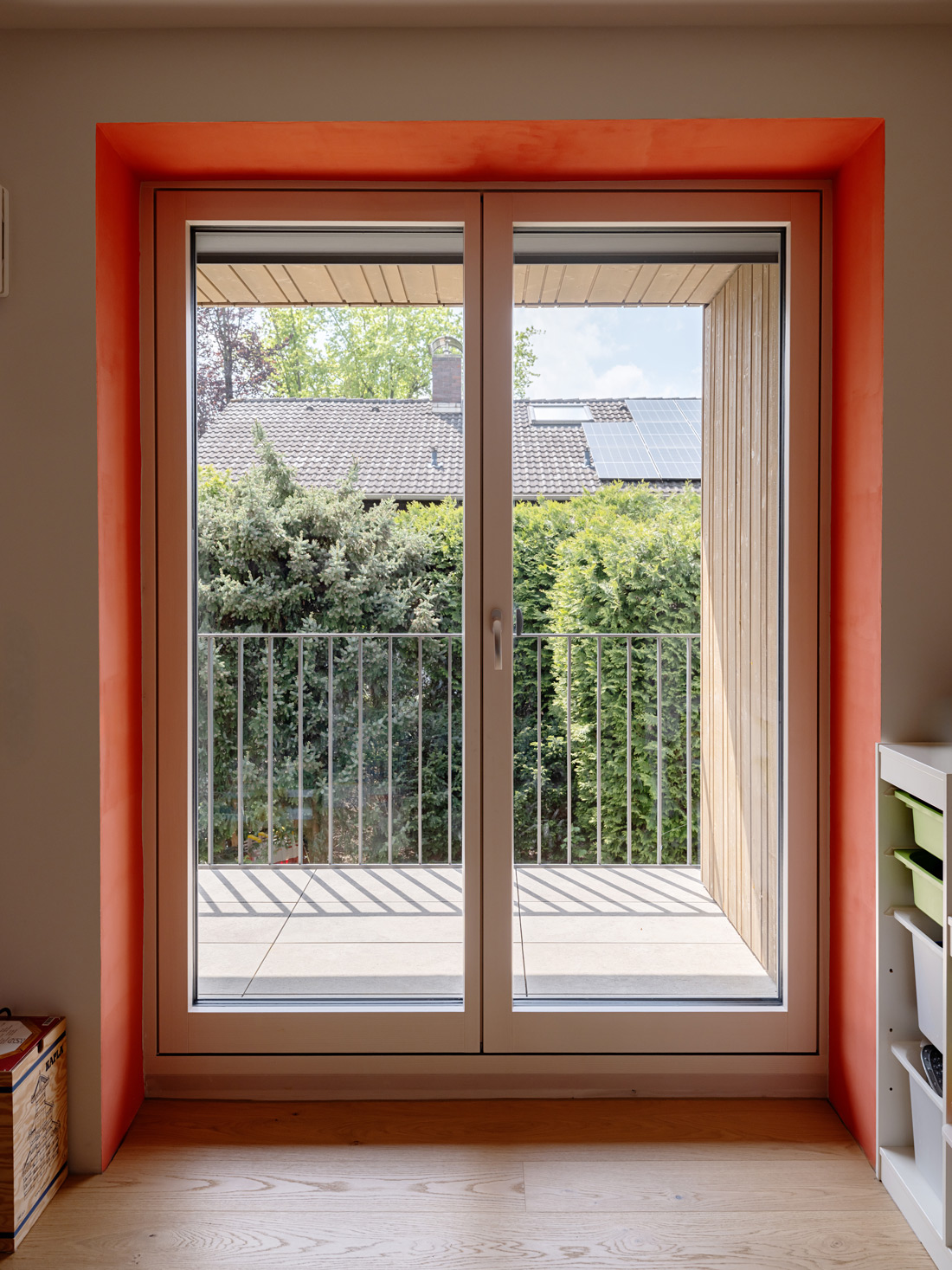
¯I balcony door
photo: Sorin Morar I¯
HausG_Schlafzimmer_Fenster
A frequently expressed concern is revealed here to be unnecessary. Even with thick external wall insulation, the

window reveals

do not become overly deep or resemble narrow loopholes. Quite the opposite: if the reveals are highlighted in colour – as implemented here by the clients – the windows become a visual focal point. The small step that became necessary due to the insulated balcony is then hardly noticeable at all.
_I
I_
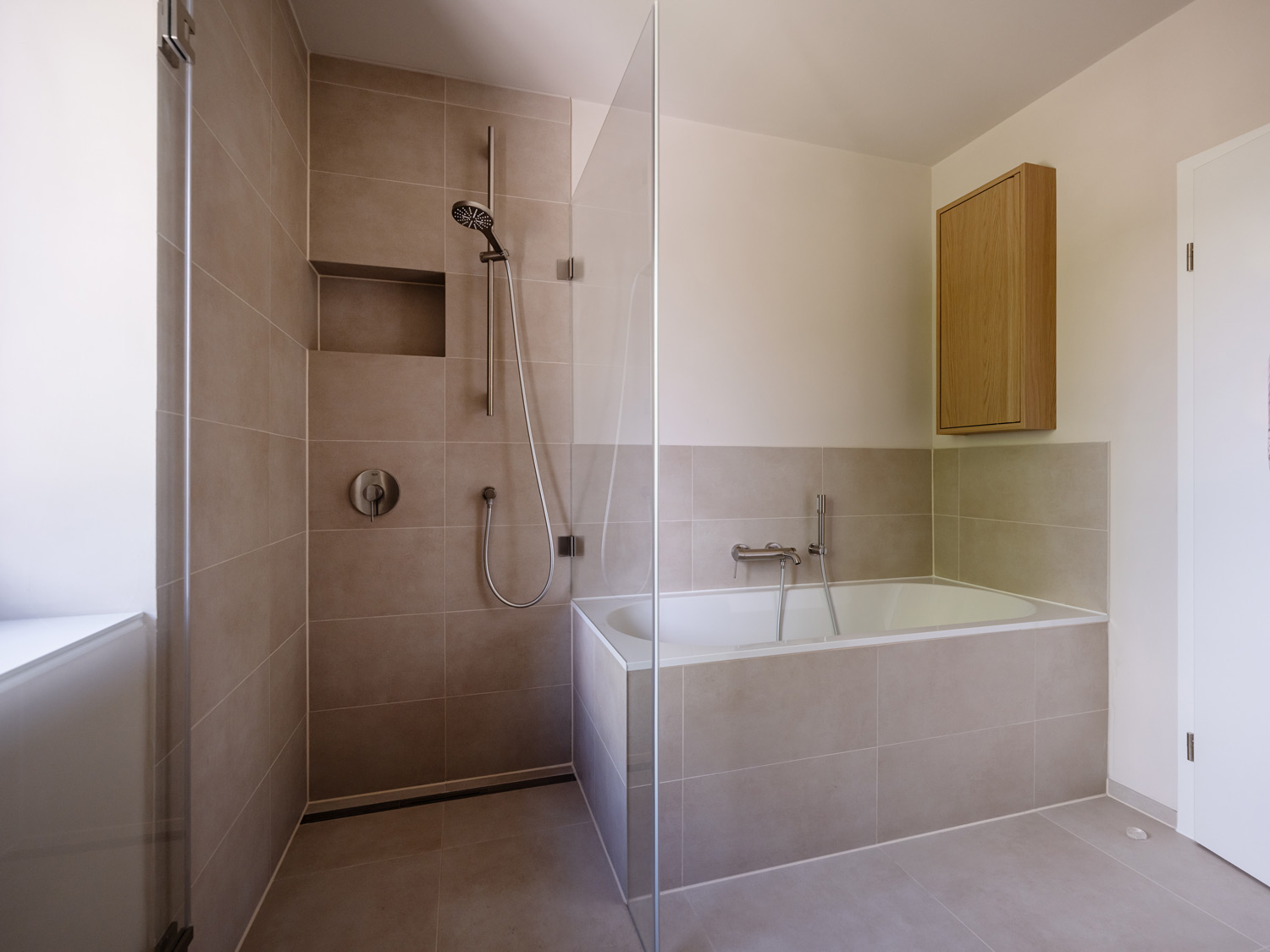
¯I Shower and Bathtub on the Upper Floor
Photo: Sorin Morar I¯

On the upper floor, the bathroom was kept in the same location but converted into a modern, age-appropriate

shower and bathtub bathroom.

At present, it serves as the family’s main bathroom and simultaneously allows for the potential subdivision of the house into an upper and lower floor.

_I
I_
¯I Aerial view
Photo: Sorin Morar I¯

After the high-quality, ecological renovation and the contemporary internal conversion, the building is now more than ready for

the next 50 years.

HausG_Luftbild
_I
I_
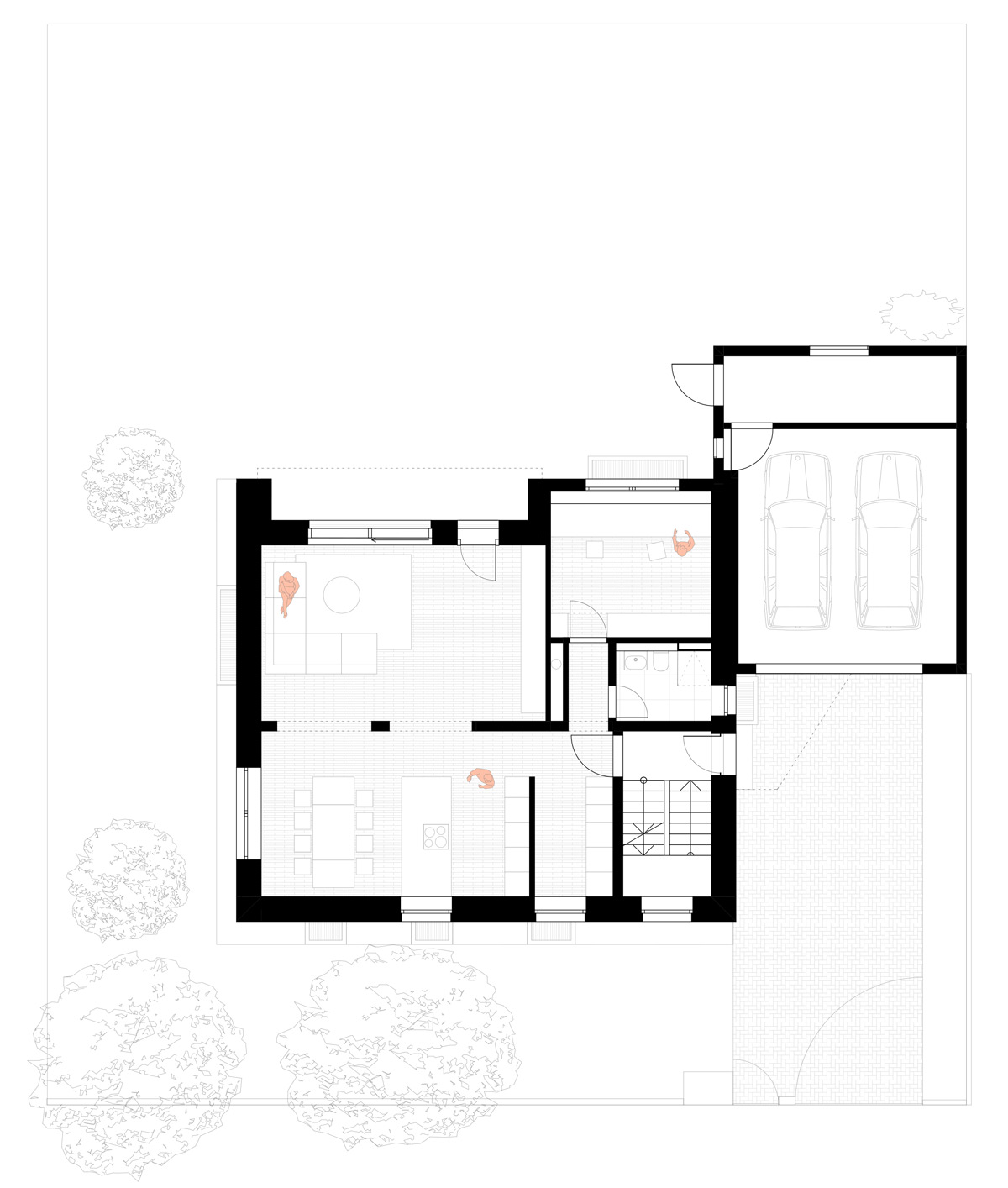
¯I Floor Plan Ground Floor
Plan: IFUB* I¯

Floor Plan Ground Floor

HausG_Grundriss_EG
_I
I_
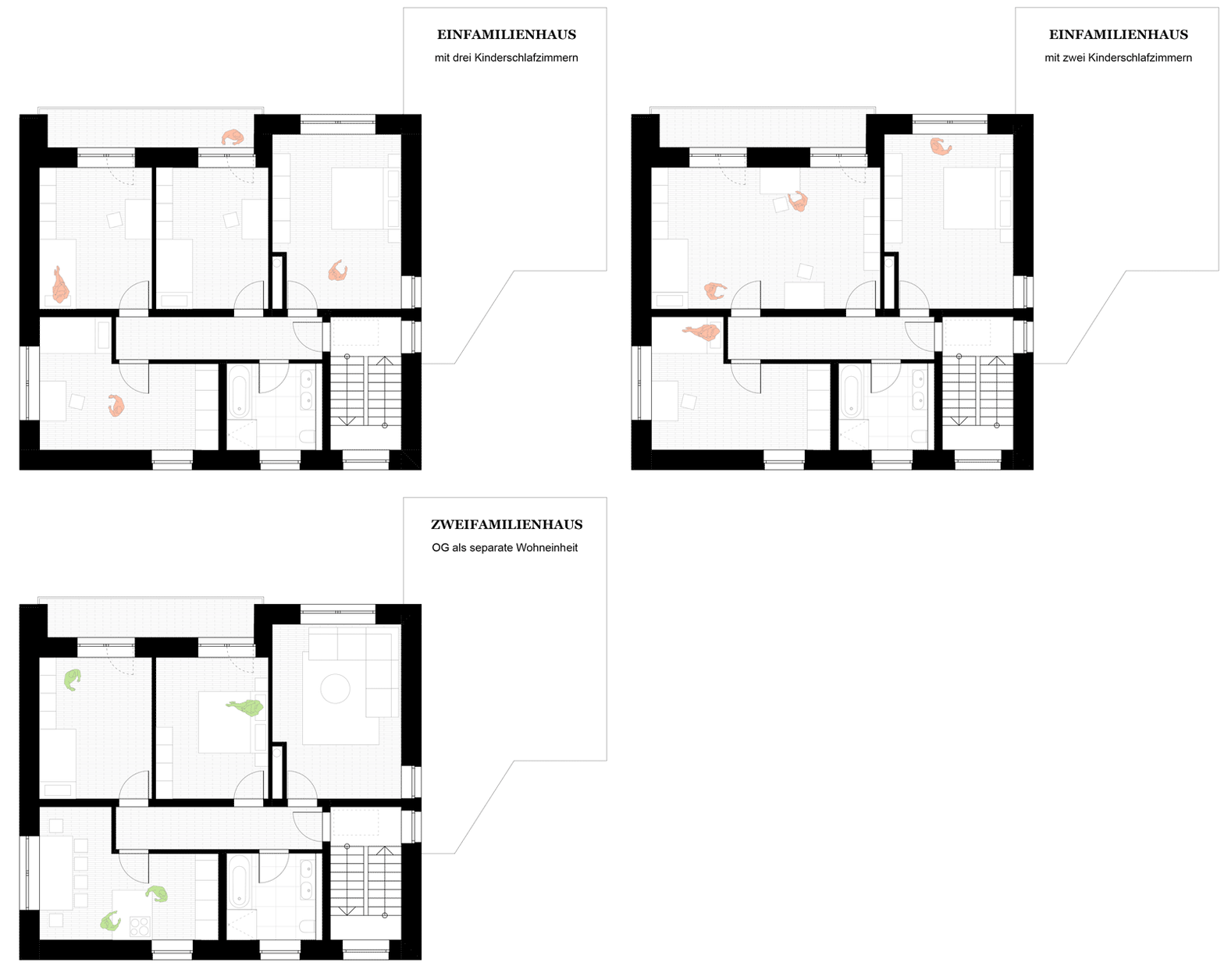
¯I Floor Plan 1st Floor
plan: IFUB* I¯

Floor Plan 1st Floor

HausG_Grundriss_OG
_I
I_
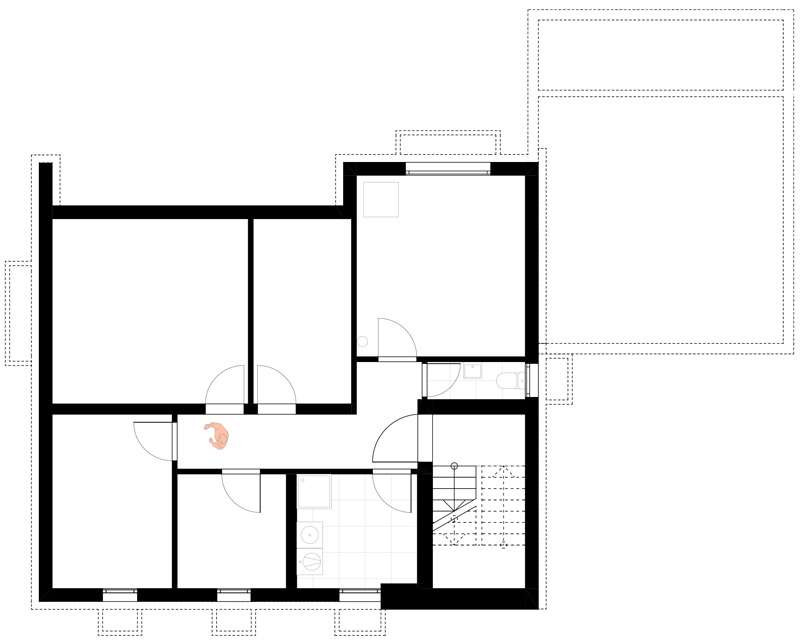
¯I Floor Plan basement
plan: IFUB* I¯

Floor Plan basement

HausG_Grundriss_UG
_I
I_
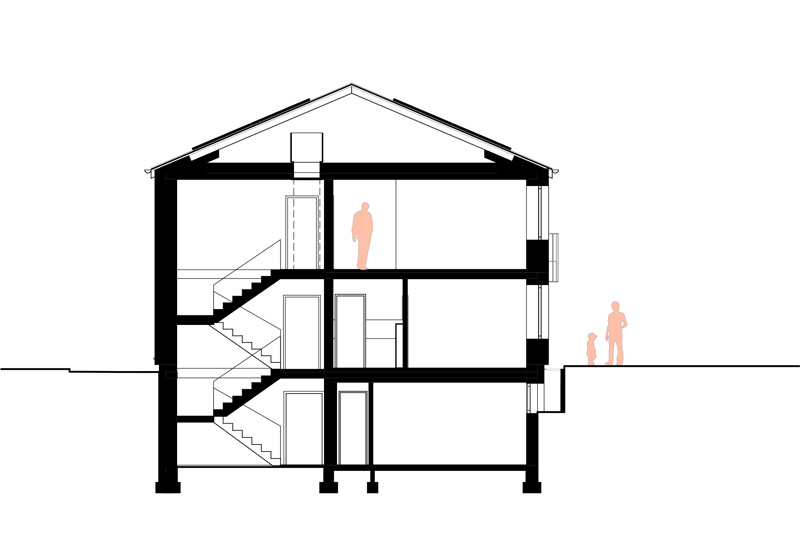
¯I Cross Section
plan: IFUB* I¯

Cross Section

_I
I_
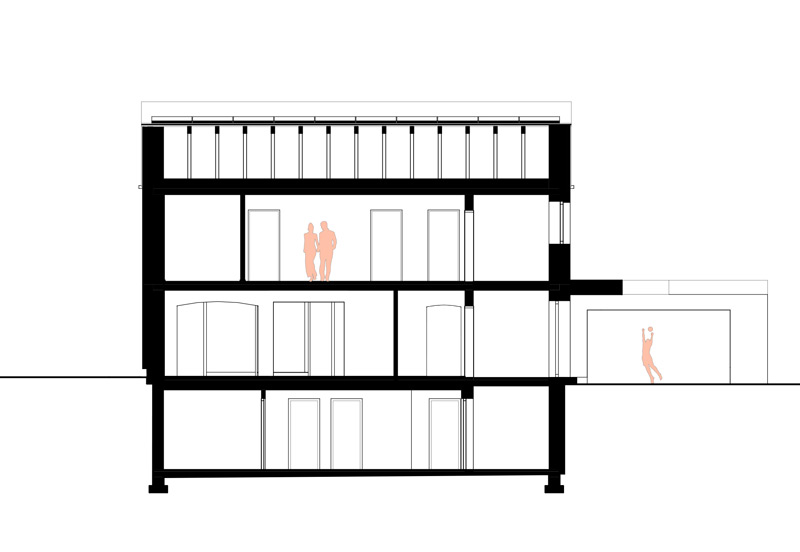
¯I Longitudinal Section
Plan: IFUB* I¯

Longitudinal Section

_I
I_
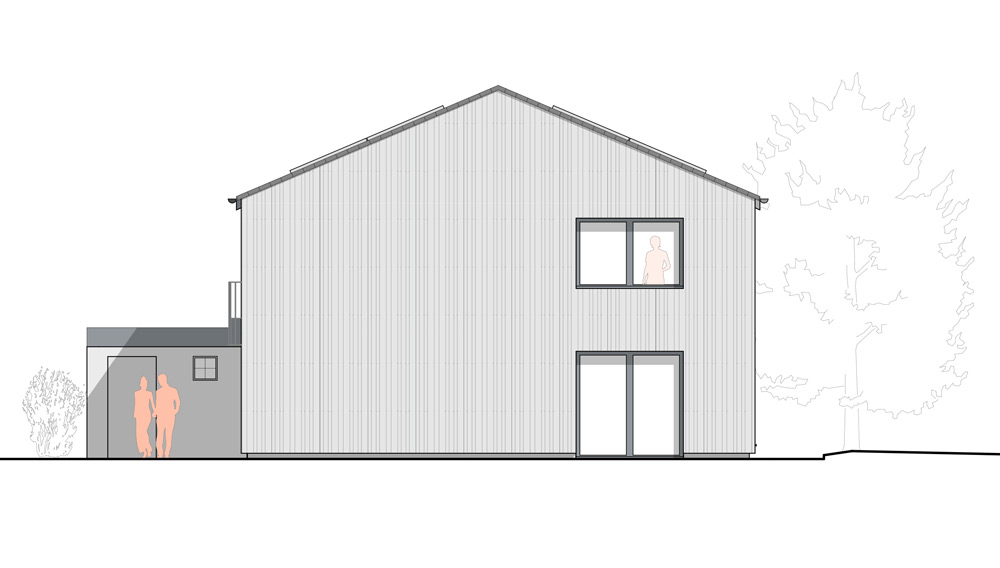
¯I Elevation East
Plan: IFUB* I¯

Elevation East

HausG_Ansicht_Ost
_I
I_
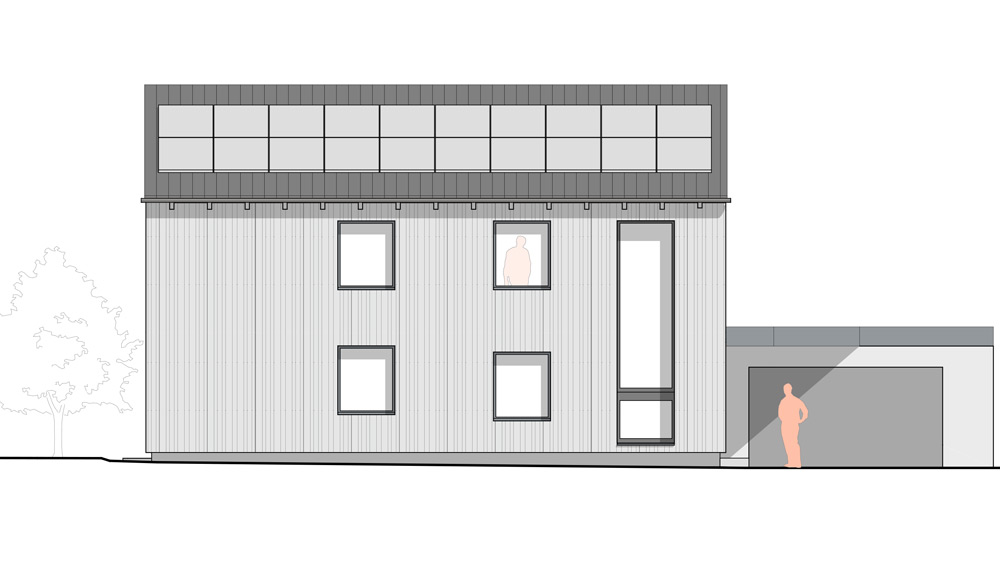
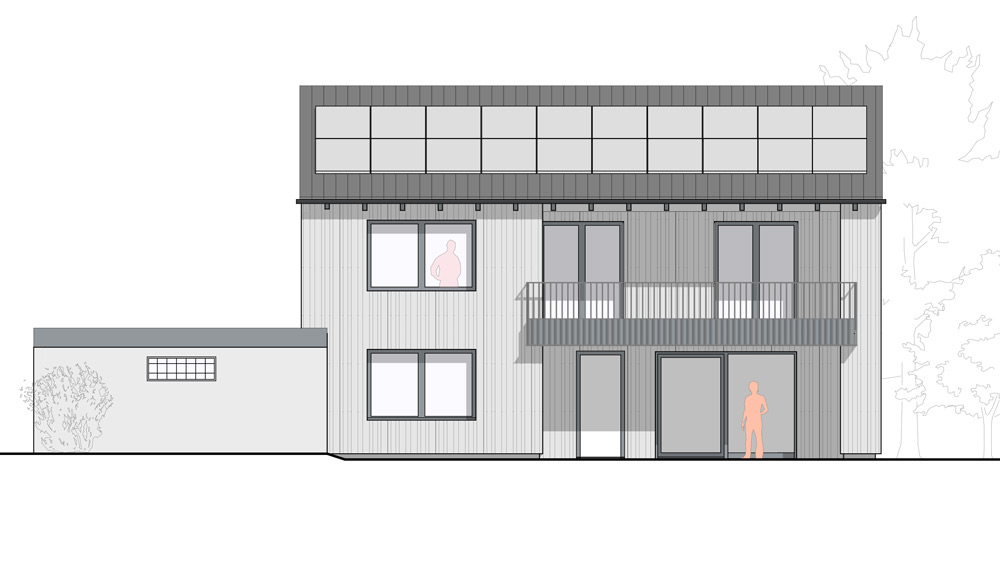
¯I Elevation South
Plan: IFUB* I¯

Elevation South

HausG_Ansicht_Sued
_I
I_
¯I Elevation West
Plan: IFUB* I¯

Elevation West

HausG_Ansicht_West
_I
I_
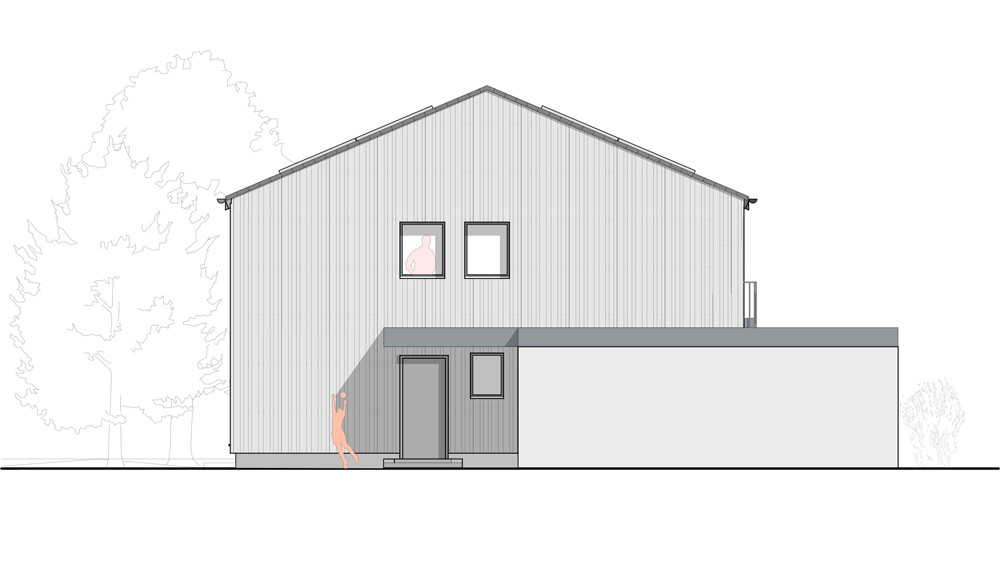
¯I Elevation North
Plan: IFUB* I¯

Elevation North

HausG_Ansicht_Nord