Application for the Curatorship of the German Pavilion at the 2027 Venice Architecture Biennale
Location: Venice
Jahr: 2026
Team IFUB*: Merle Sudbrock, Johannes Krohne, Bernhard Kurz
In collaboration with: Norbert Graeser, Christina Patz
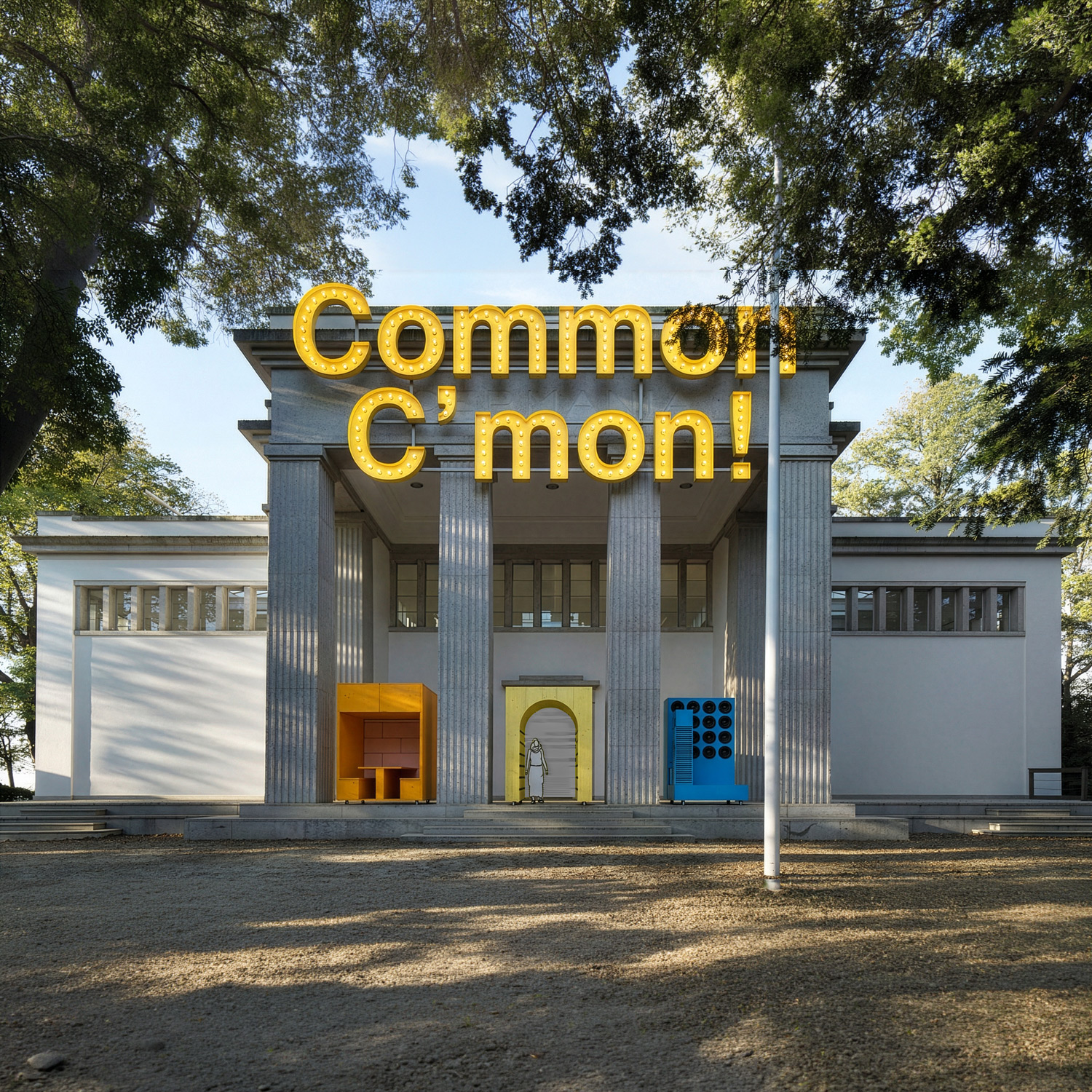
Every two years, new curators are selected for the German Pavilion at the Venice Architecture Biennale. IFUB*, together with Norbert Graeser and Christina Patz, submitted a proposal under the motto:
Four key concepts and one call to action formed the foundation of the proposal:
COMMON SENSE - A shared sense of responsibility is the guiding principle of good building culture.
COMMON GROUND - Land is a common good, not a commodity.
COMMONS - Common goods must remain permanently accessible to everyone.
COMMON GOOD - Architecture and land must serve the public good.
C´MON!
A call to all visitors: Let us work together to shape and use architecture once again in the service of the common good, and to preserve it for future generations.
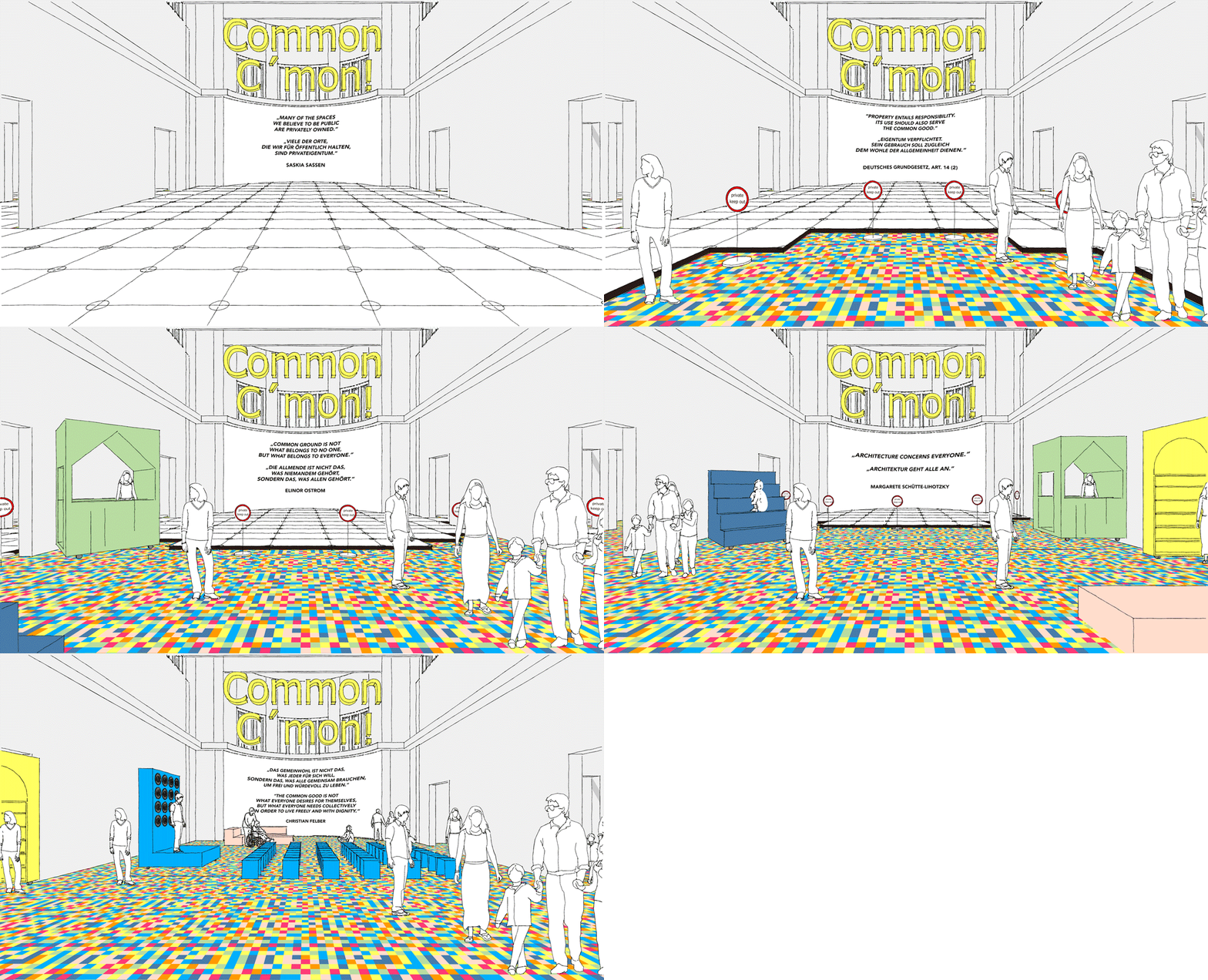
Symbolically, a
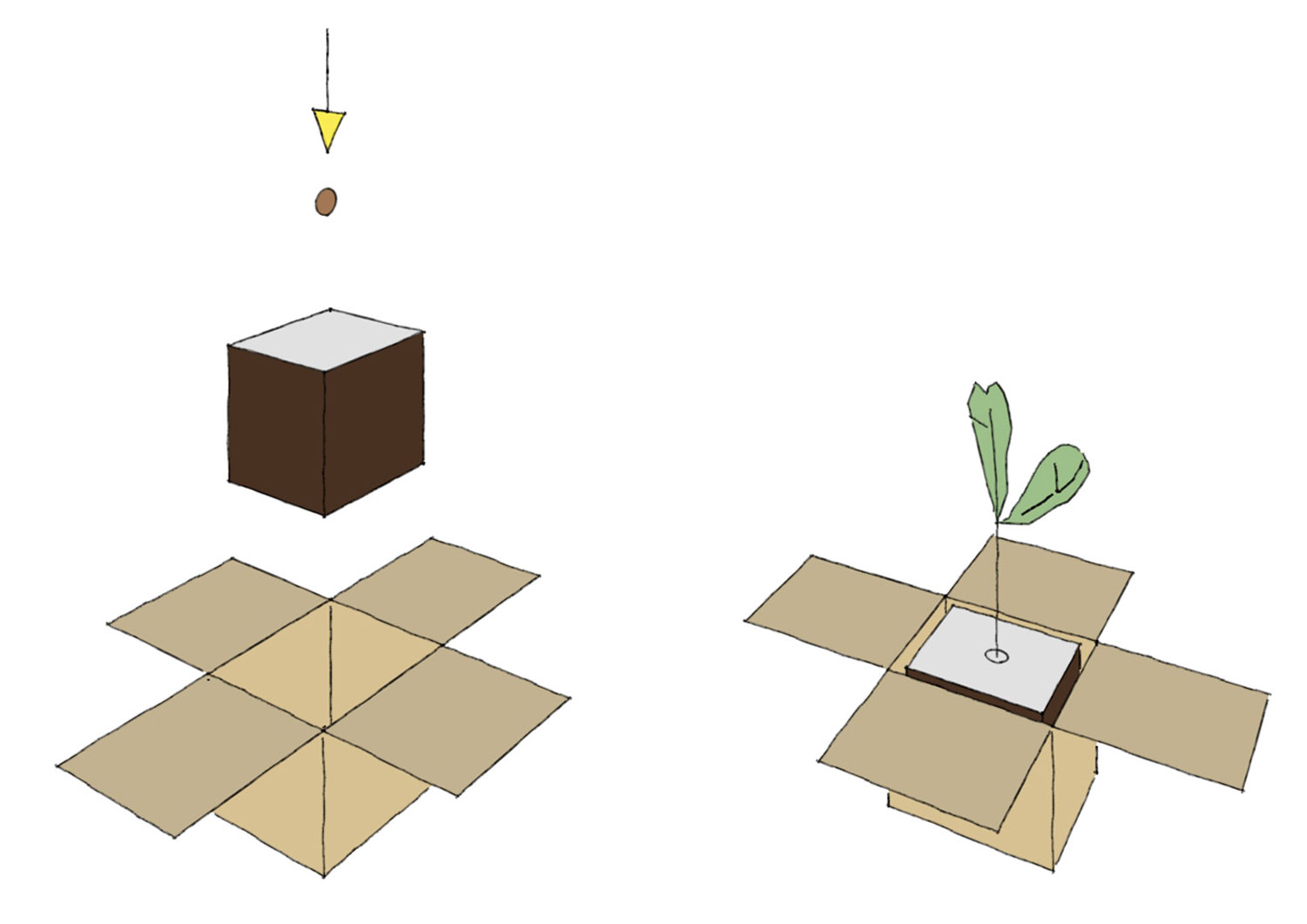
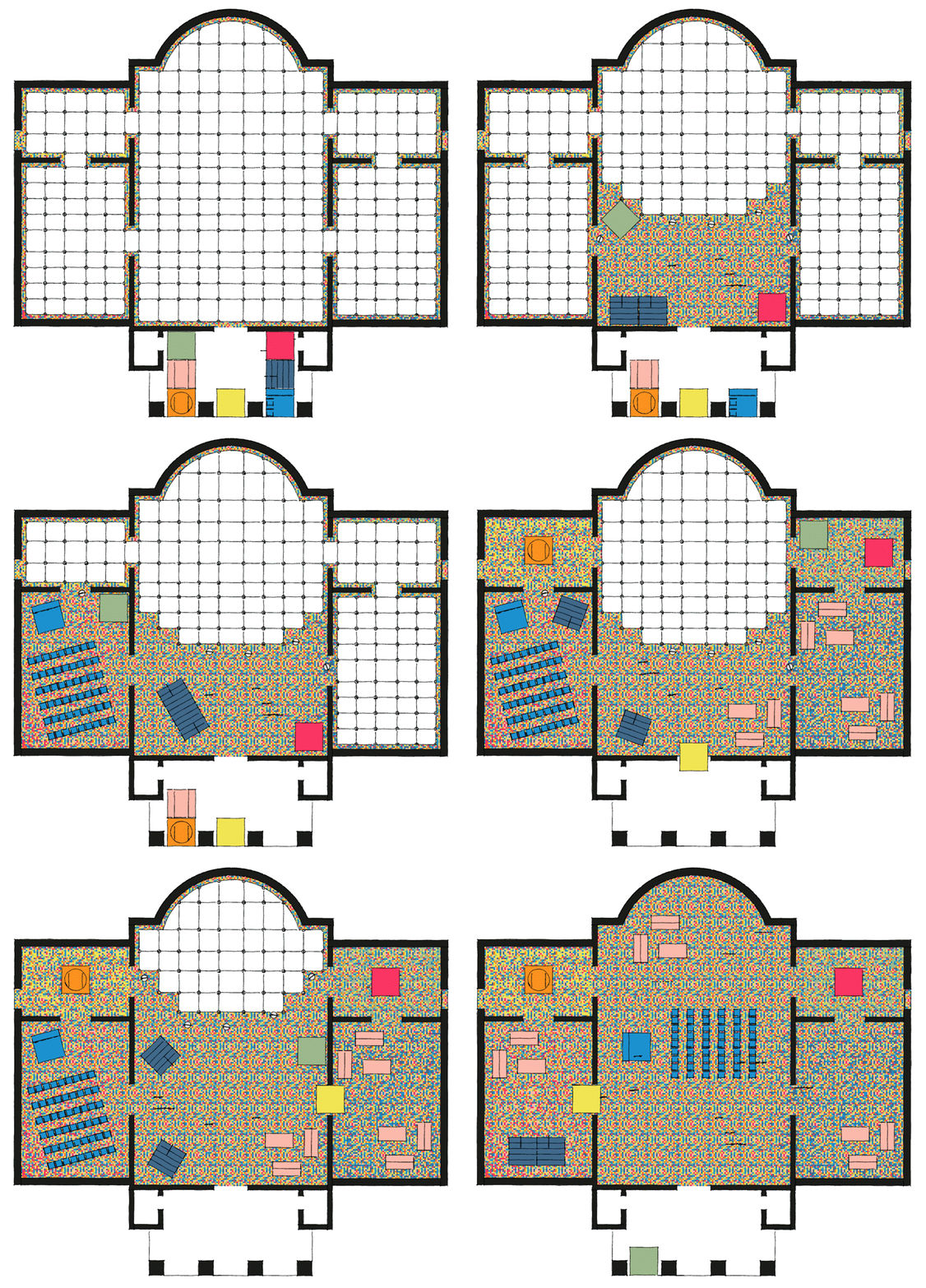
covers the pavilion, a white surface, divided by black lines into “lots” sold, demarcated, inaccessible. Every day, we dismantle a section of the plan and distribute a piece of this common-good land to visitors. This takes the form of a planting cube along with seeds - a symbolic vision for the future and an invitation to participate. Beneath the white plan, a colorful, intricately patterned, circular tile floor is revealed. The exposed area is now freely accessible and offers space for visitors. By the end of the Biennale, the entire white floor will have been distributed to visitors, thus symbolically returning the floor and the architecture to the public.
The idea was to create the white floor from
which would be distributed to visitors in small boxes over the course of the Biennale. Visitors could choose from a selection of seeds and take their planted cube home with them. In this way, the ground is symbolically returned to the people, while the idea is carried out into the world.
envisioned that, as more and more space was gradually uncovered, workshops and lectures would introduce visitors to architecture that serves the common good while also highlighting ways they could actively contribute:
What are “commons,” and how can architecture and land once again become part of the commons? How can we design architecture that serves the common good? What does a practice committed to the common good look like? How and where can architects become actively involved in promoting the common good? Who owns architecture and who owns architectural practices?
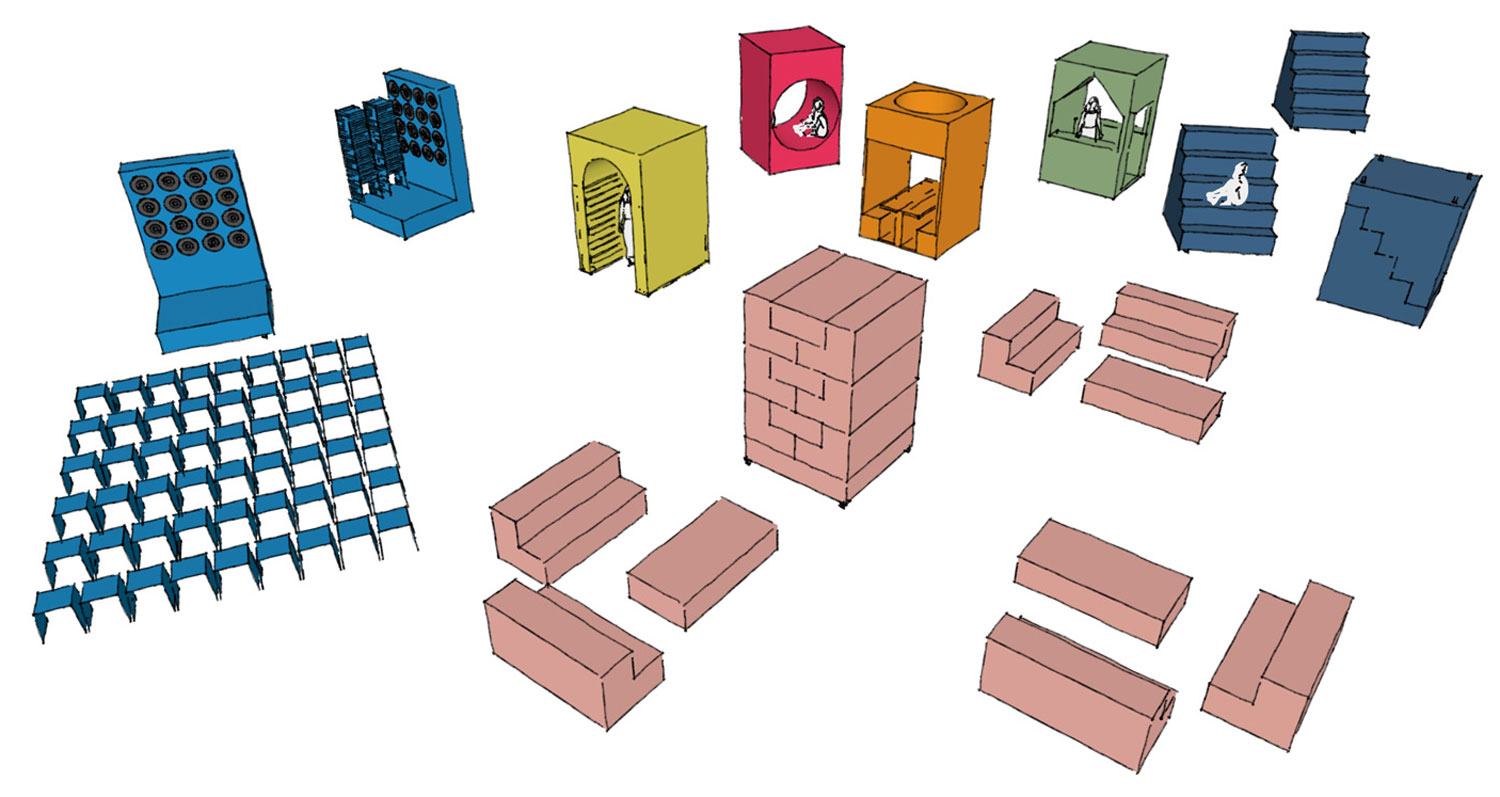
The activation of the gradually opening spaces is made possible by the
Initially, these are stored in a compact arrangement beneath the canopy next to the entrance and gradually take on their respective functions over time. There are different types: the green vehicle serves as the distribution station and is in use from the very beginning. Here, the planting cubes are packed into paper boxes and handed out to visitors. The seed dispensers are also located here. The light blue vehicle enables talks and presentations with loudspeakers and stackable chairs. In addition, the dark blue tribune element provides extra seating. In the yellow vehicle, brochures and information about the exhibition can be collected. At the beginning, it also functions as the access point to the pavilion. Stackable couches in pink create spaces for relaxation. The orange vehicle, equipped with a table and benches, offers the possibility to read into different topics or simply take a short break. The red seating element is intended as a place for reading or resting. In line with our fundamental understanding of architecture, all vehicles should, wherever possible, be made from reused materials.